
Last updated September 20, 2026
Full 25-point door and opener safety check with every visit - springs, cables, rollers, tracks, and your LiftMaster or Chamberlain opener included
You get a price before we start. It does not change when the truck arrives.
 Before
 After
After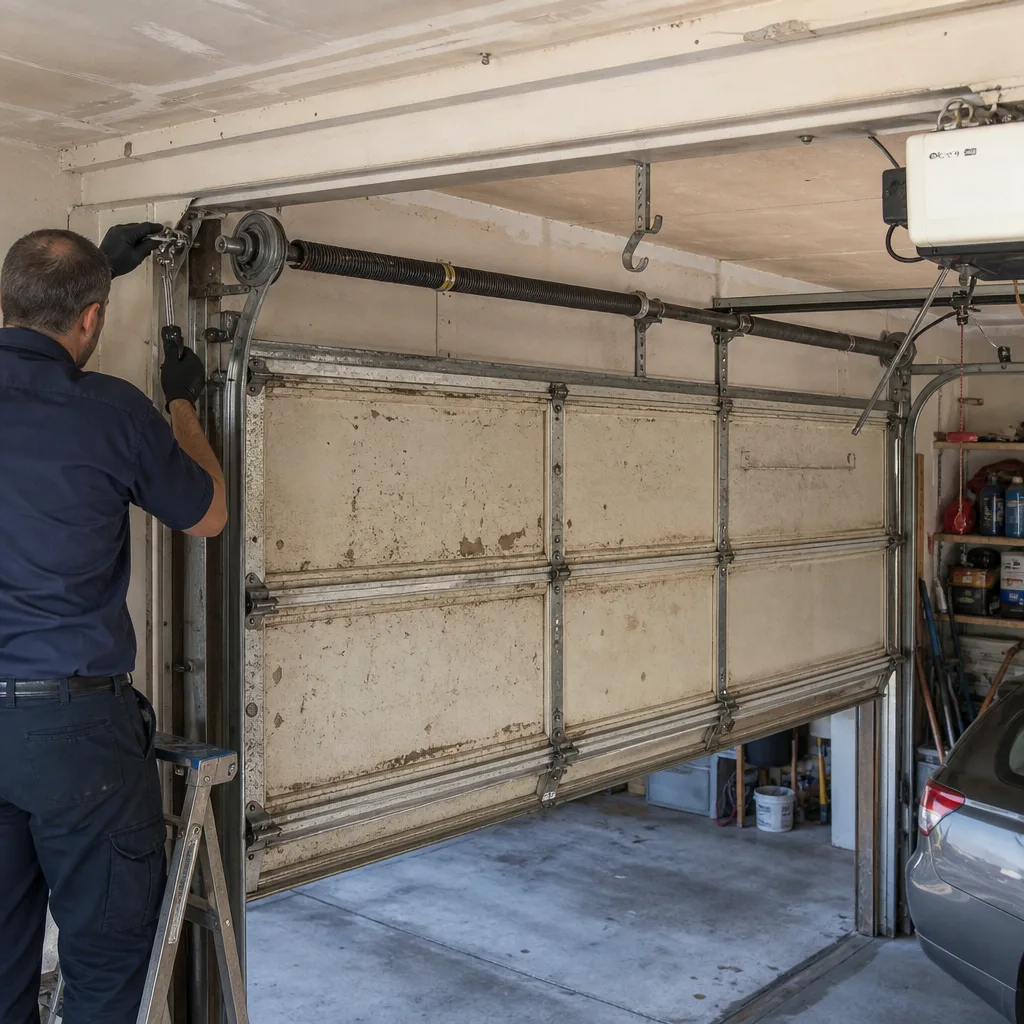 Before
 After
After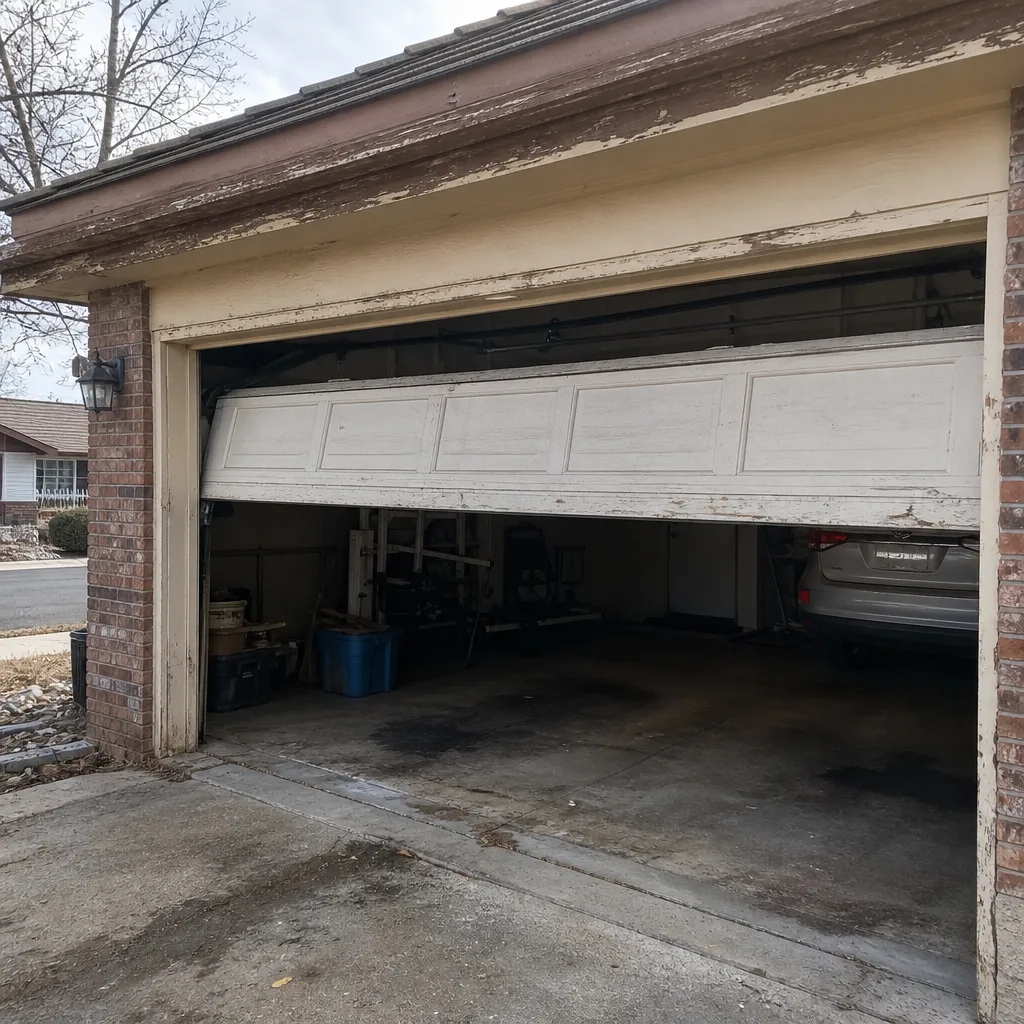 Before
 After
AfterGarage Door Warning Signs: A Littleton Homeowner’s Reference Guide
A garage door that reverses before touching the ground is telling you something precise, and it’s rarely what most quick-fix articles claim. The reversal trigger could be the limit switch, the force setting, or the safety sensor alignment, and each has a different cost and a different fix. This guide maps what you see and hear to the specific component that’s failing, what that repair costs in Littleton, and which three signs mean you should stop using the door tonight. By the time you finish reading, you’ll be able to name the part before a technician even arrives, which makes an upsell much harder to pull off.
Quick Answer
Most garage door warning signs in Littleton trace to one of five components: torsion springs, extension springs, cables, rollers, or the opener’s limit switch. For a deeper look at local maintenance needs, see our Seasonal Garage Door Care for Littleton: Year-Round Homeowner’s Guide. A door that reverses mid-close typically costs $85 to $185 to fix if it’s a sensor or limit adjustment, while a snapped torsion spring runs $225 to $395 for a pair replacement. The three signs that demand immediate attention are a broken torsion spring, a frayed cable, or a bent bottom section, and each is a safety issue, not a sales pitch.
Table of Contents
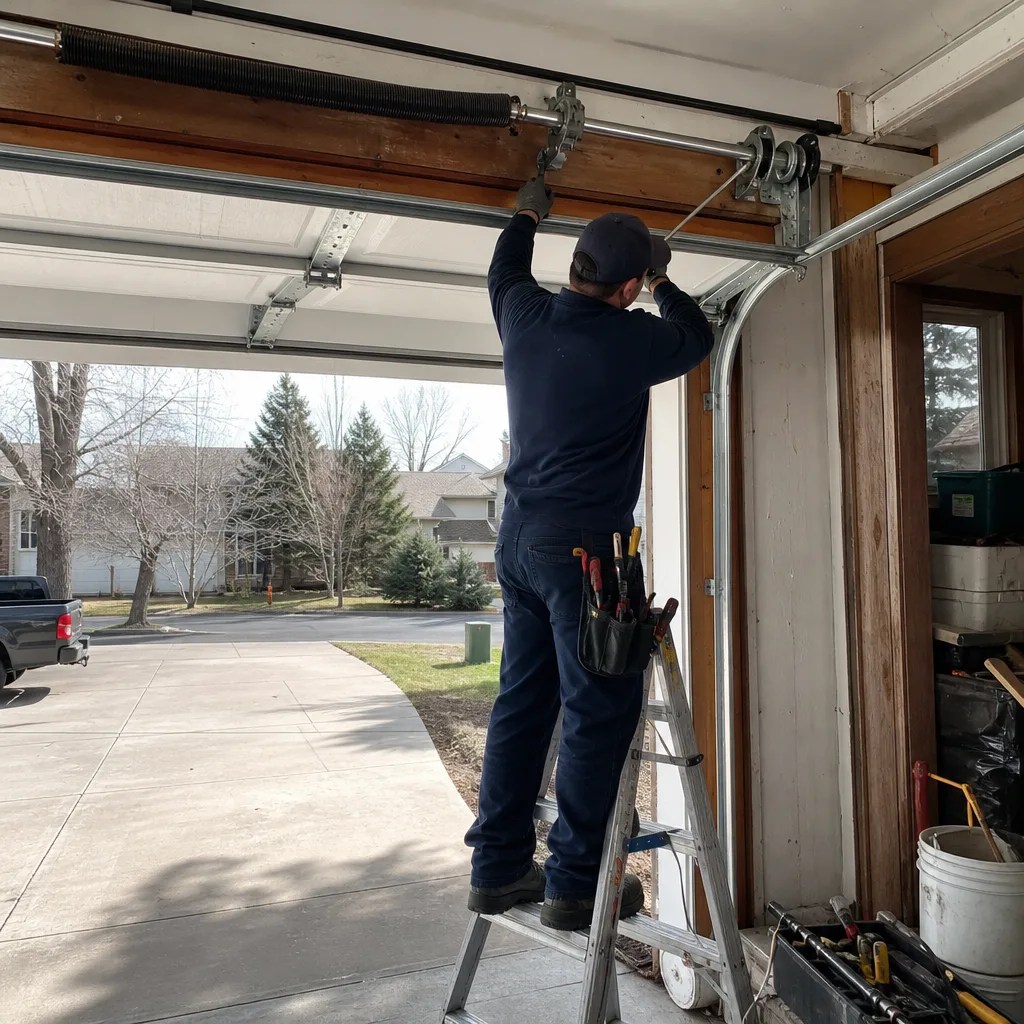
- Symptom-to-Component: What Your Door Is Actually Saying
- The Sound Library: Grinding, Popping, Squealing, and Rattling
- The 30-Day Warning: Signs of Imminent Failure vs. Slow Degradation
- Why a Slow-Moving Door Means Different Things in July vs. January
- The Three ‘Stop Using the Door’ Signs
- What Littleton’s Climate and Housing Stock Do to Garage Doors
- What You Can Check Yourself (and What You Shouldn’t Touch)
- What These Repairs Cost in Littleton: Line-Item Ranges
- Common Mistakes to Avoid
- When to Call a Professional
- Frequently Asked Questions
- The Bottom Line
 Before
 After
AfterSymptom-to-Component: What Your Door Is Actually Saying
Every observable behavior on a garage door points to a specific mechanical or electrical component. The trick is knowing which one, because mistaking a limit switch for a sensor problem means paying for a fix that doesn’t fix anything. Here’s the diagnostic table we use when a Littleton homeowner describes a symptom over the phone.
- Door reverses immediately after touching the floor: The down-limit setting on the opener is off. The opener’s limit switch determines where the door stops; if it’s set too far, the door hits the floor, reads that contact as an obstruction, and reverses. Secondary possibility: a cracked gear in the opener’s travel module, common on LiftMaster and Chamberlain units older than 8 years. Elimination test: run the door with the opener disconnected from the trolley. If it moves smoothly by hand, the door’s balance is fine and the limit is the culprit. Cost in Littleton: $85 to $135 for a limit adjustment and force-setting calibration.
- Door reverses midway up, with no visible obstruction: The force sensitivity setting is too low, usually because the springs have weakened and the opener is now working harder than it was calibrated for. Secondary possibility: a failing logic board reading false resistance. Elimination test: disconnect the door from the opener and lift it manually to waist height. If it doesn’t stay put, the springs are the root cause, not the opener. Cost: $225 to $395 for spring replacement if that’s the diagnosis, or $120 to $210 for a force-setting correction if the springs test fine.
- Door jerks or shudders when opening: Rollers are worn, a hinge is binding, or the torsion tube bearing is failing. Secondary: a partially unbalanced door from one spring losing tension. The shudder is the door’s weight shifting unevenly across the track. Cost in Littleton: $95 to $185 for a full roller replacement (nylon rollers with sealed bearings are worth the upgrade), or $35 to $75 per hinge if binding is the issue.
- Door doesn’t open at all; opener hums for 2-3 seconds then stops: The motor is running but the drive can’t move the door. Most common cause: a broken torsion spring. The opener is trying to lift the full, unassisted weight of a 150-to-250-pound door, and its internal force limit shuts it down. Secondary: a stripped drive gear inside the opener, more common on Craftsman and older Raynor units. Cost: $225 to $395 for spring replacement, or $265 to $480 for a new opener if the drive gear is stripped and the unit is past its service life.
- Door sags visibly on one side when open: Either a spring on that side has lost tension (for extension spring systems) or the cable on that side has stretched beyond spec. This isn’t a cosmetic issue. A sagging door puts uneven load on every roller and hinge, accelerating wear across the whole system. Cost: $180 to $290 for cable and spring rebalance on a Wayne Dalton or Clopay extension system.
This is the part where we mention something most guides skip: the first thing a technician should do is disconnect the door and test the balance by hand. If a company quotes you a new opener without ever touching the door’s balance, that’s a red flag. Our Garage Door Repair in Littleton process starts with the balance test because it isolates whether the problem is in the door or the opener. A door that’s balanced wrong will destroy a new opener the same way it destroyed the old one.
The Sound Library: Grinding, Popping, Squealing, and Rattling
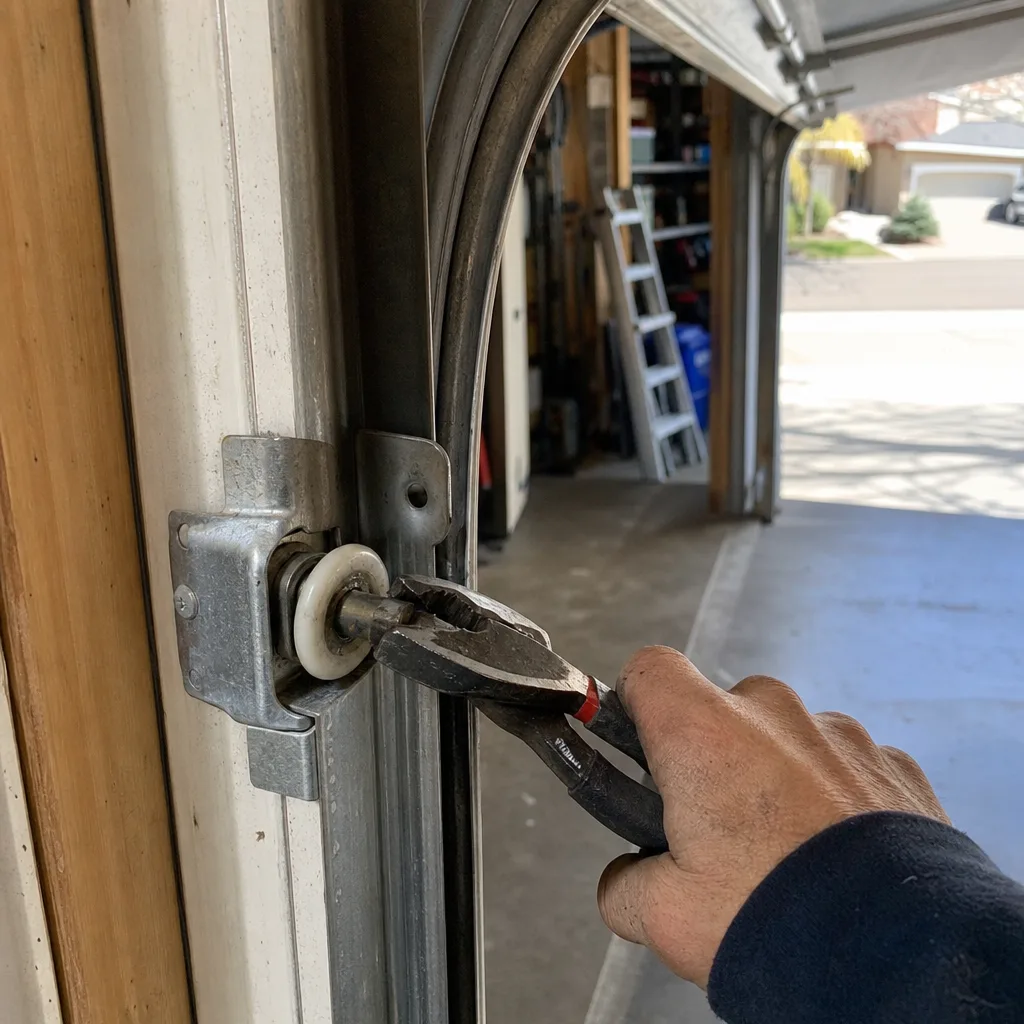
Sound is a diagnostic tool if you know the vocabulary. Each noise your door makes corresponds to a specific mechanical interaction, and misreading the noise leads to the wrong fix. Here’s the translation from what you hear to what’s actually happening.
Grinding: Metal-on-metal contact where there shouldn’t be any. In 80% of the Littleton homes we see, grinding traces to a roller bearing that has failed, which means the roller is dragging along the track instead of rolling. You’ll see flat spots on the roller and fine metal dust on the track. Less common: the torsion spring’s center bearing has failed and the spring tube is grinding against the bracket. Grinding never resolves itself. Every cycle of use makes it worse because metal particles from the wear enter the track and accelerate roller failure. If you catch it at the roller stage, the fix is $95 to $185. If you wait until the track is scored, a track replacement adds $120 to $200.
Popping: A sharp, single report when the door passes a specific point in its travel, usually about two-thirds of the way up. That’s a section hinge seizing and then releasing, or a roller popping out of a worn hinge sleeve. In wood-frame doors common in older Littleton neighborhoods like Ridgewood Park, popping is often the door’s stiles working against the fasteners as the wood contracts and expands with humidity. Popping is the sound of deferred maintenance. The fix, which is tightening and lubricating hinge points plus replacing any seized hinges, runs $35 to $75 per hinge in our area. A full hinge pack replacement across a 16-foot door is typically $165 to $260.
Squealing: High-pitched, sustained, and usually worse in cold weather. Squealing is a dry bearing or a dry torsion spring coil, not a failing component, in most cases. The torsion spring coils rub against each other as they wind and unwind, and when the factory grease wears off, the friction produces that scream. Littleton’s dry winter air strips lubrication faster than humid climates do. A silicone-based spray on the spring coils and the roller bearings usually eliminates it in five minutes, and it costs about $8 for a can. But here’s the caveat: if you’ve lubricated and the squeal returns within a week, the bearing is beyond saving and needs replacement, not more lubricant.
Rattling: Loose fasteners, always. The question is which ones. The most common sources are loose track bolts where the vertical track meets the horizontal, loose hinge fasteners where they attach to the door sections, and loose opener mounting brackets. Rattling amplifies with door speed, so it’s loudest when the door is moving fastest at mid-travel. What matters is this: a rattle means something is moving that shouldn’t move, and that movement wears the surrounding components. Tightening is the fix in 70% of cases, but if you find a bolt that won’t tighten because the hole has wallowed out, that bracket or track section needs replacement. A track bolt replacement in Littleton runs $40 to $80 if it’s caught early.
The 30-Day Warning: Signs of Imminent Failure vs. Slow Degradation
Some garage door problems will wait for a convenient appointment. Others will not. The difference matters because a door that fails catastrophically is a safety hazard and a bigger invoice than the same repair done proactively. Here’s how to separate the two timelines.
Imminent failure (address within 30 days):
- A torsion spring with a visible gap in the coil or a clean break. The spring has already failed; it’s just a question of when the door stops opening entirely. You get roughly 20 to 30 additional cycles before complete failure in most cases.
- A cable with visible fraying, especially where it contacts the pulley. Frayed strands mean the cable’s load capacity is compromised. A cable under full tension that snaps releases that energy suddenly.
- Any door section with a crack or bend, particularly the bottom section near the center. A bent bottom section changes the door’s geometry, which stresses every other component each cycle.
- A roller that has come completely out of the track. The door is now running at reduced support, and the remaining rollers are carrying extra load. This is a days-to-failure scenario.
Slow degradation (schedule within 60-90 days):
- Gradual increase in operating noise. Lubrication and minor parts replacement will usually restore it before major failure.
- Door moving slightly slower than it did six months ago. This is usually spring fatigue, and it’s predictable. Springs lose approximately 5-7% of their lift capacity per year in Littleton’s climate, where temperature swings put extra thermal stress on the steel.
- Weather seal cracking or pulling away from the bottom section. This is a degradation problem, not a safety one. Replacing weather seal costs $85 to $150 and prevents moisture and rodent entry from Littleton’s winter snowmelt.
- Opener remote range decreasing. This is typically a failing capacitor on the logic board or a worn remote battery, not an imminent failure, but it’s worth scheduling a diagnostic.
The distinction matters because our scheduling queue in Littleton doesn’t treat these the same way. If you call with a broken spring at 7 a.m., you’re on the schedule that day. If you call with a squeal that’s been there for a month, we’ll find a slot this week that works around your schedule. The door tells you which timeline you’re on. This guide exists so you can read it correctly.
Why a Slow-Moving Door Means Different Things in July vs. January
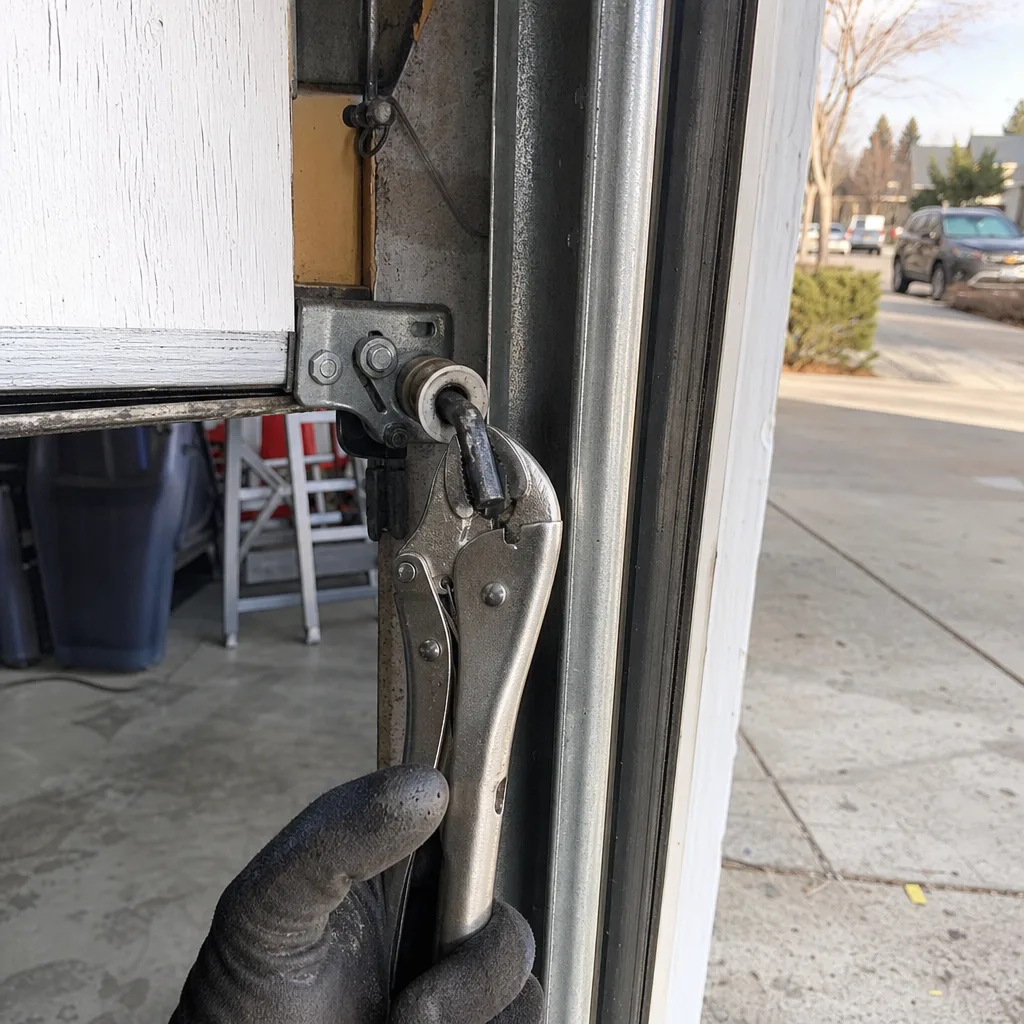
A garage door that moves slowly in Littleton has two possible root causes, and the season tells you which one is more likely. Misdiagnosing this leads to the wrong fix, which is why we ask what month you first noticed the slowdown.
Summer slowdown: Warm weather means the door’s components have expanded, and the most common culprit is a door that’s out of balance because a spring has lost tension. When a spring weakens, the opener compensates by working harder, and the increased load slows the travel speed. You’ll also notice the opener running hot and the motor sounding strained. In July, a slow door in Littleton is almost always a spring issue, even if the springs look intact. The test: disconnect the opener and lift the door manually. A properly balanced door should lift with minimal effort and stay at waist height when released. If it feels heavy or drifts downward, the springs are the diagnosis. Cost: $225 to $395 for a pair of torsion springs calibrated to the door’s exact weight.
Winter slowdown: Cold weather thickens the grease in the opener’s gear case and the bearings, which increases mechanical resistance. Denver metro temps below 20 degrees make this worse, and Littleton’s temperature swings mean the door that’s fine at noon may drag at 6 a.m. The additional factor: metal contracts in the cold, and the torsion spring’s lifting force actually increases slightly when the steel is cold, but the thickened grease more than offsets that gain. The test for winter slowdown is simpler: if the door returns to normal speed after running three or four cycles, it’s a lubrication viscosity issue, not a spring issue. The fix is a cold-weather-grade lubricant on the bearings and roller stems. If the door stays slow even after warming up, you’re back to a spring diagnosis, and the cold weather simply made the existing problem obvious sooner.
Our experience in Littleton specifically: homes in neighborhoods like Governor’s Ranch and The Meadows, which sit at slightly different elevations and see different wind exposure, don’t show materially different failure patterns. But homes with uninsulated garages see winter slowdown more sharply because the opener and springs are exposed to ambient cold. Insulating the garage door, which is a Garage Door Installation in Littleton consideration, doesn’t change spring life, but it does reduce the temperature swings that stress every moving part.
The Three ‘Stop Using the Door’ Signs
Three warning signs on a garage door mean the door should not be operated again until a technician has assessed it. Not operated slowly. Not operated once more to get the car out. Not operated because you’re late for work. Each of these is a safety issue with a mechanical reason behind it, and each can fail catastrophically without further warning.
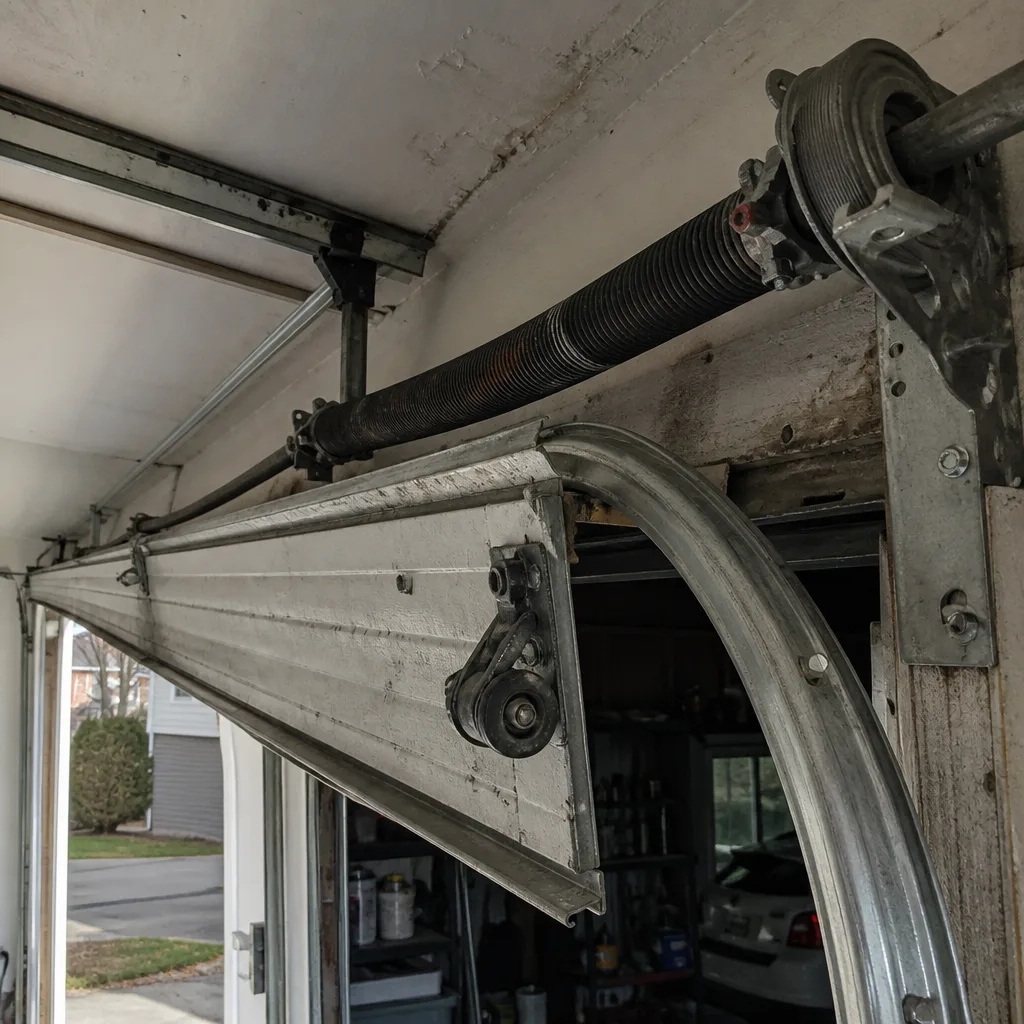
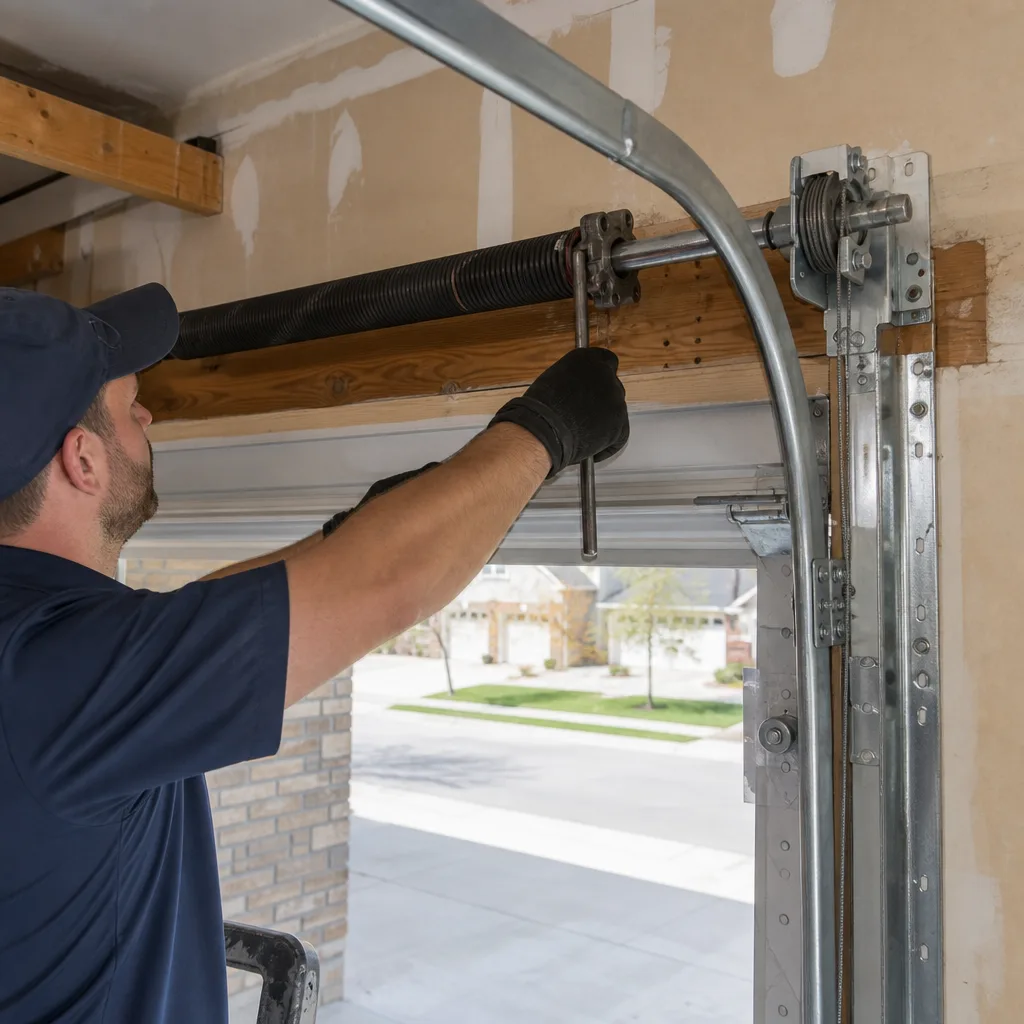
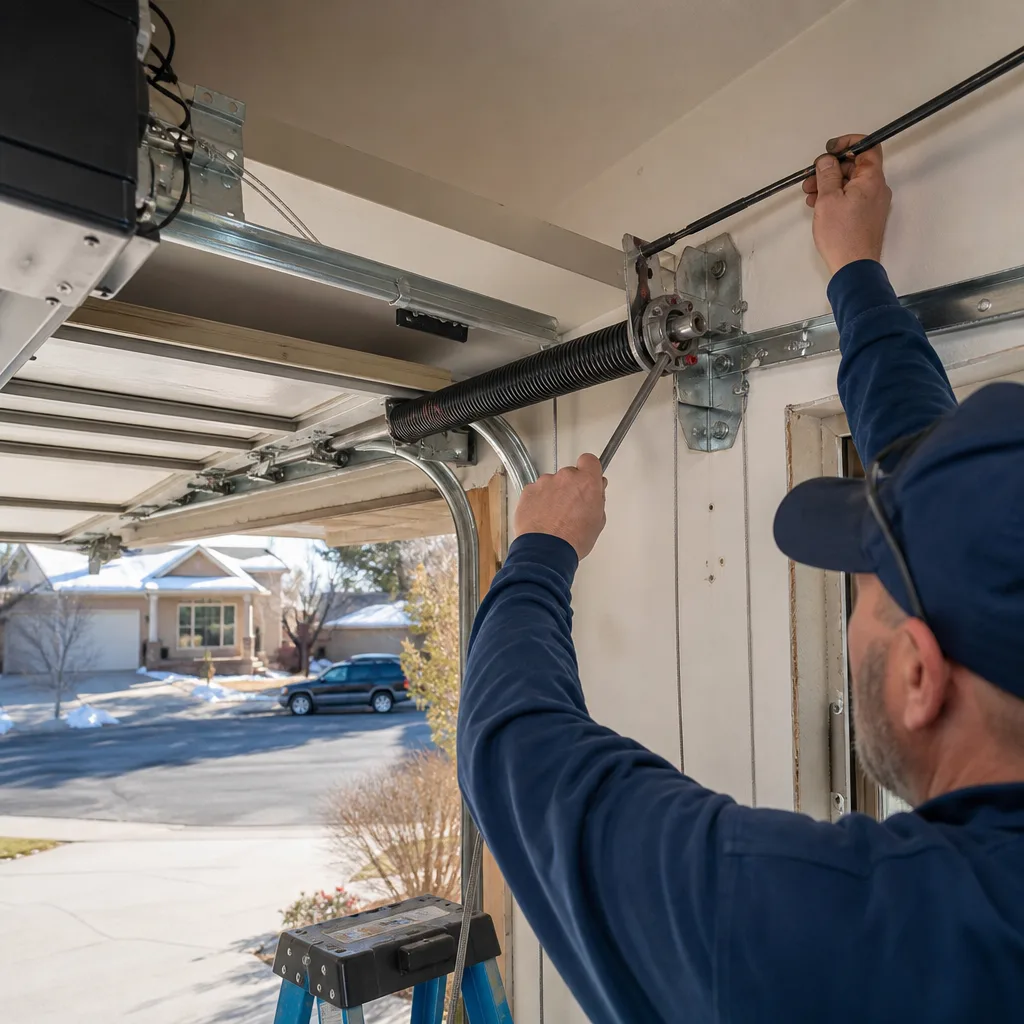
1. A broken torsion spring. The torsion spring is a steel coil under enormous tension that counterbalances the door’s weight. When it breaks, which happens most often at a coil point from metal fatigue, the door loses its counterbalancing force entirely. The opener is not designed to lift an unbalanced door. Attempting to operate it stresses the opener’s gears, the cables, and the door sections. The greater risk: if the spring has snapped but the door is still connected to the opener, the door can drop with enough speed to cause serious injury. A spring break often sounds like a gunshot from the garage, which is why we hear from Littleton homeowners who thought a car backfired outside. Cost: $225 to $395 for a professionally installed spring pair. This is not a DIY repair. Torsion springs store enough energy to break fingers, hands, and facial bones if they release while being adjusted.
2. A frayed cable. The lift cables, which run along both sides of the door, carry the door’s full weight when it’s in motion. They’re rated for far more load than normal operation requires, but that rating assumes intact strands. When strands begin to fray, especially near the bottom bracket or the drum, the cable’s remaining strength is a calculation nobody wants to test. A cable failure typically happens under load, which means the door is mid-travel, and the result is the door slamming down or hanging diagonally, which then bends the door sections and stress-fractures the remaining components. If you see cable strands sticking out anywhere along the cable’s length, that’s the signal. Cost: $110 to $220 for a cable replacement, more if the door must be rebalanced afterward.
3. A bent bottom section. The bottom section of the door is a structural load-bearing member, not just a panel. When it bends, usually from hitting something or from a failed component dropping the door, the door’s geometry is compromised. A bent bottom section drags on the track, changes the force distribution through the door, and accelerates wear on every hinge, roller, and bracket. More critically, a bent bottom section signals that the door experienced an impact, and that impact may have damaged the door’s internal strut or the mounting points where the cable brackets attach. Continuing to operate a door with a bent section risks a cascade failure where the section breaks free or the cable brackets tear out. Cost for bottom section replacement in Littleton: $180 to $420 depending on the door’s make, material, and whether the section is insulated.
None of these three signs get better with time, which is the mechanical definition of why you stop using the door. It’s not about urgency as a sales tactic. It’s that the next cycle of the door is the one that could fail.
What Littleton’s Climate and Housing Stock Do to Garage Doors
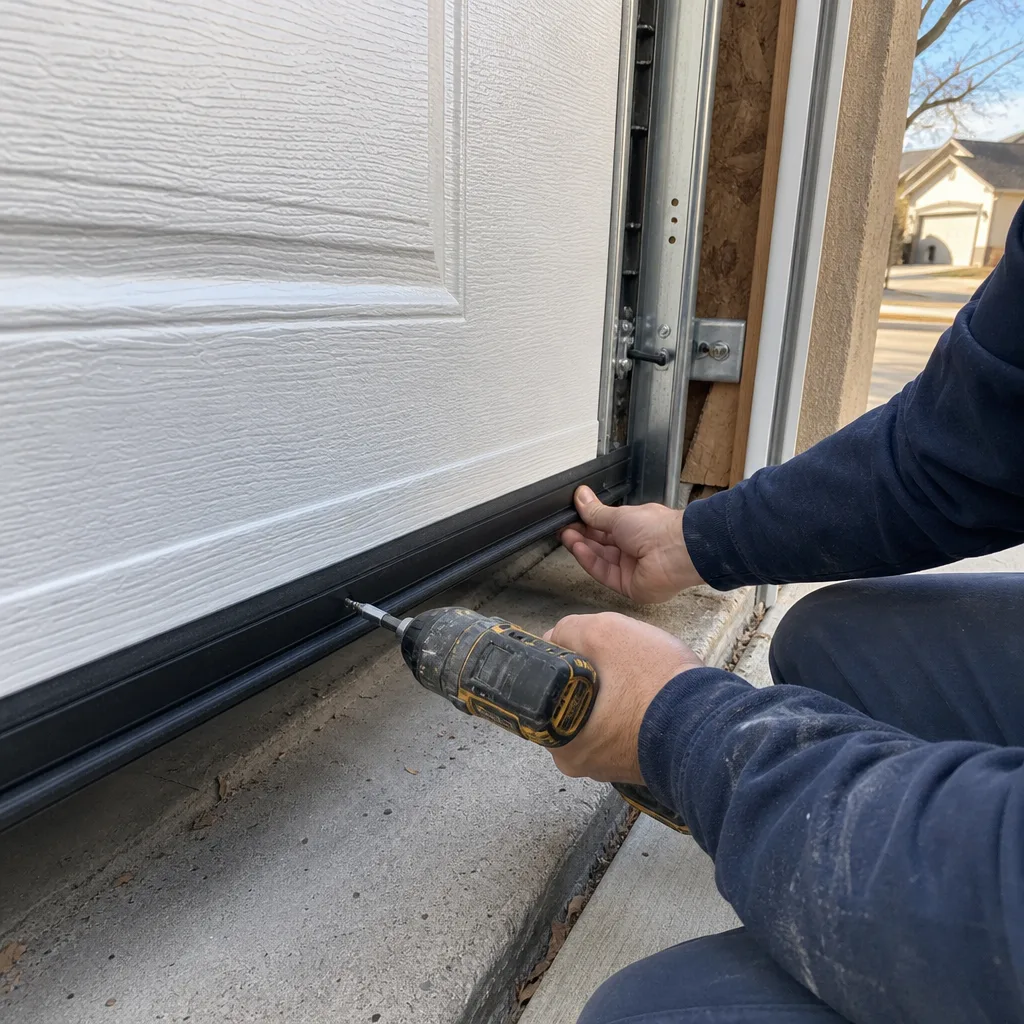
The Complete Guide to Garage Door in Littleton explains how local conditions affect your system. Garage doors in Littleton fail in predictable ways that differ from garage doors in Phoenix or Seattle, and understanding why saves you money. The three local factors are temperature swing, UV exposure, and housing stock age.
Temperature swing: Littleton sees daily temperature swings of 30 to 40 degrees during spring and fall. Steel expands and contracts with every cycle, which means fasteners work loose faster here than in more stable climates, and torsion springs, which are wound steel under load, fatigue from repeated thermal cycling on top of mechanical cycling. The practical result: springs in the Denver metro area, including Littleton, often reach their cycle limit at the low end of their rated lifespan. A spring rated for 10,000 cycles may deliver 7,500 in a Littleton garage that sees extreme temperature variation. When we replace springs, we recommend sizing for a higher cycle rating, which costs marginally more and lasts years longer.
UV exposure: At 5,351 feet of elevation, Littleton gets more intense UV than most of the country. That radiation degrades weather seal rubber faster, which is why bottom seals on Littleton garage doors are often cracked and brittle within three to four years of installation. The seal isn’t just cosmetic. A failed bottom seal lets winter cold into the garage, which stresses the opener and springs, and it lets snowmelt in, which corrodes track hardware and the door’s bottom section. Checking the seal is a spring and fall task here, not an afterthought.
Housing stock: Littleton’s housing runs from 1950s ranch homes near downtown to 2010s construction in the subdivisions near Chatfield State Park. The older homes often have wood-frame garage doors that predate modern safety standards, and many have extension spring systems rather than torsion springs. Extension spring systems are more prone to cable wear and door imbalance, and they’re more dangerous when a spring breaks because the spring flies along its track without a containment cable. If you own a pre-1990 home in Littleton and the garage door is original, a full system conversion to a modern torsion spring setup, done as part of a Garage Door Installation in Littleton project, is the highest-value upgrade you can make for both safety and service life.
What You Can Check Yourself (and What You Shouldn’t Touch)
Some diagnostics are safe and useful. Some are genuinely dangerous. Here’s the line, drawn by someone who’s seen the results of both approaches.
Safe to check yourself:
- The balance test: Pull the release handle (the red cord hanging from the opener rail), lift the door manually to waist height, and let go. It should stay put or drift only slightly. If it drops or climbs, the springs need professional attention. This test requires no tools and no disassembly.
- The photo-eye alignment check: A green or solid light on each photo eye sensor, mounted about six inches off the floor on each side of the track, means they’re aligned and functional. If one blinks or shows red, something is blocking the beam or the sensor has shifted. You can gently clean the lens with a soft cloth and check for obstructions. Cost if this fixes it: $0.
- Visual cable inspection: Look at the cables running along both sides of the door. You’re checking for stray strands poking out anywhere, rust where the cable meets the bottom bracket, or slack in one cable compared to the other. This is a look-don’t-touch inspection only. If you see any of those signs, stop using the door and call.
- Lubrication: A silicone spray applied to the roller bearings, hinge pins, and spring coils three times a year extends component life in Littleton’s dry climate. Use a spray with a straw applicator to keep it controlled. Don’t use WD-40, which is a solvent and will strip existing lubricant.
Leave to a professional, no exceptions:
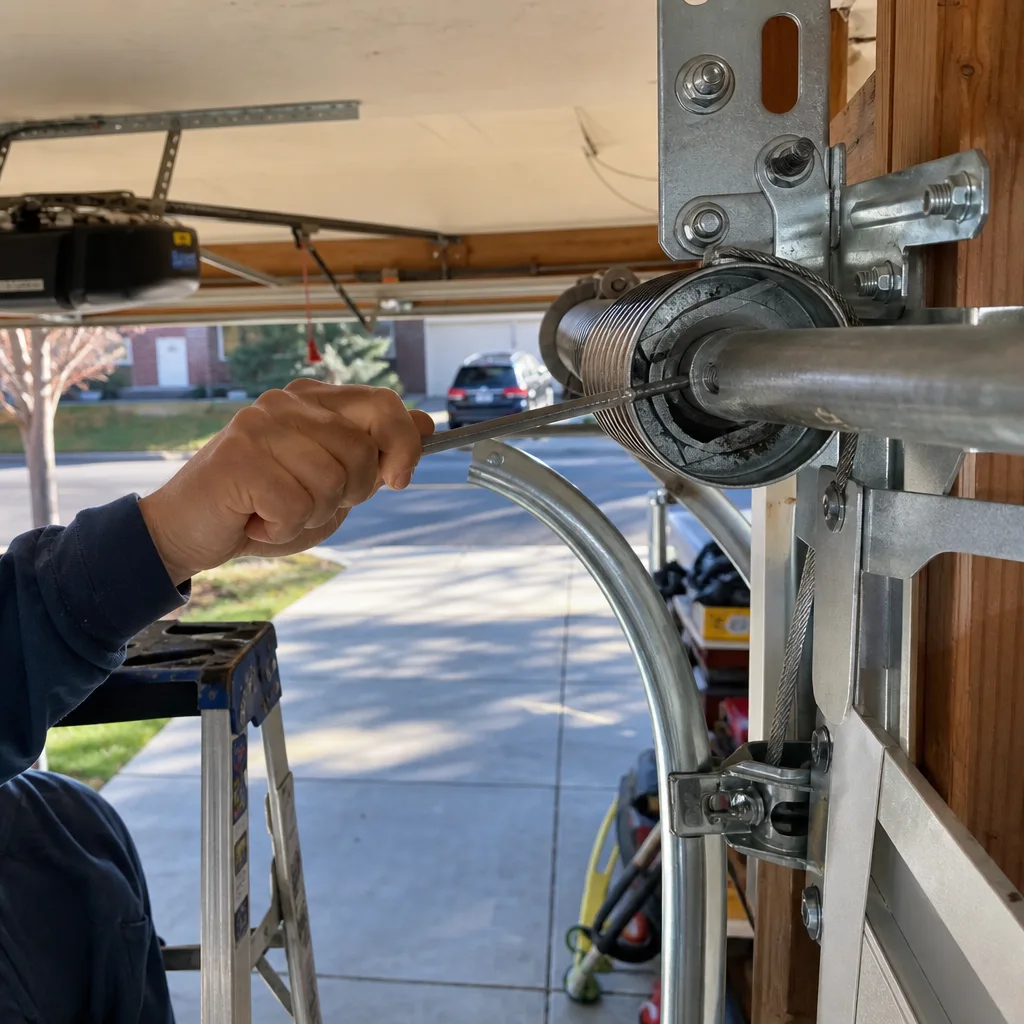
- Torsion spring adjustment or replacement: The spring is under hundreds of pounds of wound tension. The winding bars that adjust it can release that energy instantly if they slip, and the forces involved break bones. This is not a YouTube repair.
- Cable replacement: The cables carry the door’s full weight, and they’re attached to brackets that are under the same tension as the springs. Removing a cable without properly unwinding the spring first turns the cable into a projectile and the spring into a bomb.
- Track realignment: The tracks guide a door that weighs between 150 and 250 pounds. If the tracks are out of square, the door can bind and torque the track off its mounting brackets. The repair requires tension adjustment on the springs and precise track alignment, and doing it wrong causes the door to come off the track entirely.
- Opener logic board or capacitor replacement: The capacitor inside an opener stores electrical charge even when the unit is unplugged. You can get a shock replacing parts on the board. That’s a $120 to $210 diagnostic call from a technician, not a DIY project.
If you’re not sure which category a repair falls into, the answer is the second one. We’ve been called out to enough DIY opener repairs in Littleton to know that fixing a $200 problem yourself can turn it into a $600 problem with a side of hospital visit. The Garage Door Opener Repair & Installation in Littleton service exists because these systems are more complex and more dangerous than they look from the outside.
What These Repairs Cost in Littleton: Line-Item Ranges
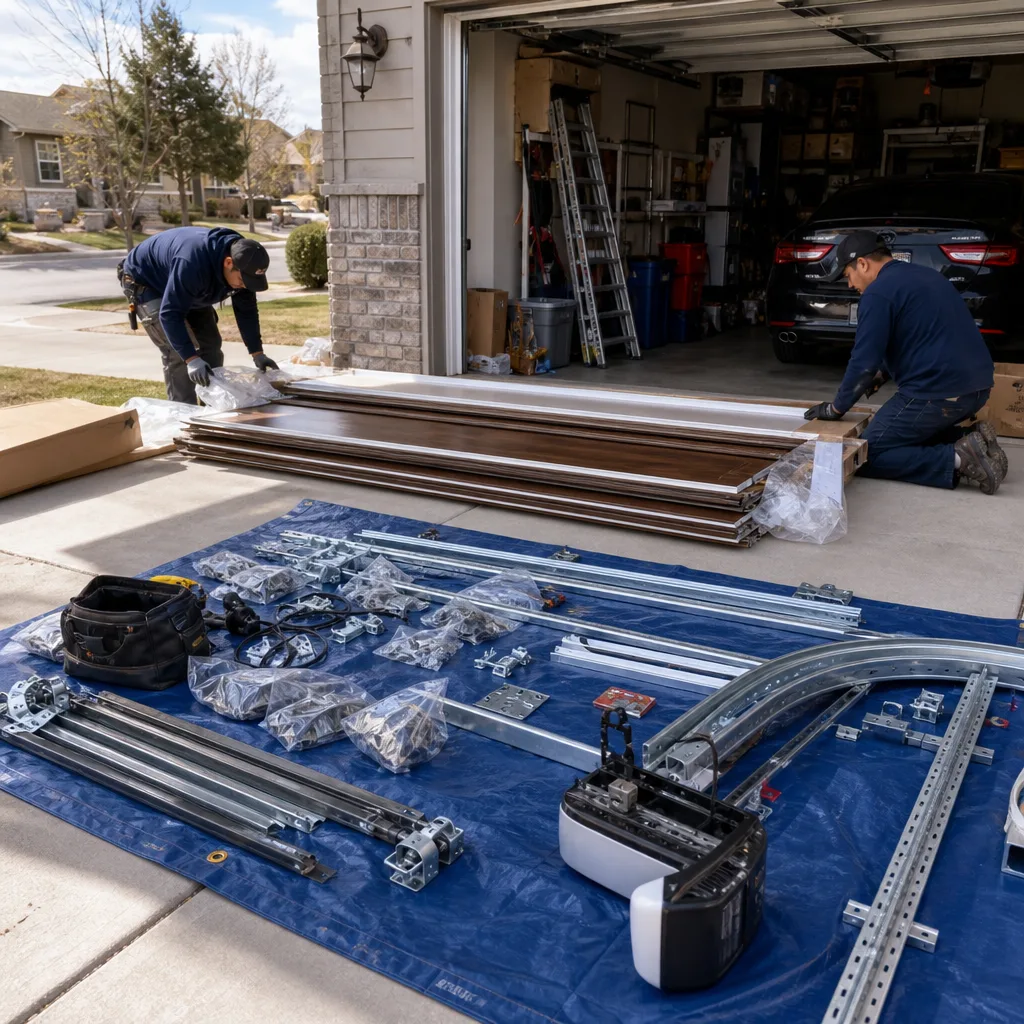
Here’s the number range you’re actually looking for, in dollars, with the mechanical context for each. These are market rates in Littleton as of this writing, and they assume a licensed, insured company doing the work with a written price before the job starts.
- Torsion spring pair replacement: $225 to $395. The price varies by spring size, cycle rating, and the steel quality. Higher-cycle springs add $40 to $80 and last roughly twice as long. We size springs to the door’s exact measured weight, not the old spring’s dimensions, because Littleton doors often have mismatched springs from previous replacements.
- Extension spring replacement (both sides): $180 to $290, plus $45 to $75 to add safety containment cables if they’re missing, which they usually are on older Littleton homes.
- Cable replacement (both sides): $110 to $220. This includes re-balancing the door afterward because new cables change the geometry slightly.
- Roller replacement (full set, nylon with sealed bearings): $95 to $185. Nylon rollers with sealed bearings outlast steel rollers by roughly double because they don’t grind against the track and they run quieter. Worth the upgrade.
- Bottom section replacement: $180 to $420 depending on the door’s make and whether the section is insulated. This is a factory section ordered to match, not a patch job.
- Limit switch or force setting adjustment: $85 to $135. This is a calibration job, and it should include checking the door balance because a limit that’s drifted often drifted because the springs changed.
- Track realignment or bracket repair: $120 to $240 depending on the extent of the misalignment and how many brackets need replacement.
- Logic board replacement on the opener: $165 to $310. If the opener is more than 10 years old, it’s usually smarter to replace the whole unit, which runs $390 to $650 installed.
- Full diagnostic visit with no repair: $79 to $125, which should be credited toward the repair if you proceed with the same company.
A price range on a page always requires a disclaimer, so here’s ours: your specific door’s weight, brand, age, and condition determine where you fall in these ranges, and the quote you get should be flat and written before any work begins. That’s Clause 1 of The Haven Standard, the operating standard Servo Garage Doors has worked to since 2015. If a company won’t put the price in writing before starting, the range they quote you over the phone is an opening negotiation, not a commitment.
Common Mistakes to Avoid
- Lubricating a worn-out roller instead of replacing it. Once a roller bearing has failed, lubrication just quiets the noise briefly while the roller continues to drag. The grinding sound returns within days because the bearing’s internal surfaces are already scored. In Littleton’s dry air, the lubricant evaporates faster anyway, and the same noise comes back worse.
- Replacing the opener when the springs are the problem. We see this once a month in Littleton. A door won’t open, the homeowner assumes the motor died, and a new opener gets installed on a door with a broken spring. The new opener then strains against the same imbalance and fails prematurely. The balance test, which takes 30 seconds, prevents this.
- Operating the door after a spring breaks. Once the spring snaps, the door’s full weight is unassisted. Just one to two manual cycles can bend the door sections and damage the opener’s gear train, which adds $300 to $600 to the repair. The door should be left closed or left open, but not moved.
- Adjusting the limit switch to compensate for a door that’s out of balance. If the door has started reversing at the floor, some homeowners adjust the down-limit setting so it stops slightly earlier and doesn’t trigger the reversal. This masks the problem, usually a weakening spring or a gear issue, and the door keeps deteriorating. The limit switch adjustment should fix a door that’s binding; it should not fix a door that’s becoming harder to move.
- Relying on the opener’s safety reversal as a substitute for maintaining the door. The auto-reverse system, whether it’s the photo eyes or the force sensor, is a backup. It’s not the primary safety system, and it doesn’t protect the door’s mechanicals. Waiting for the auto-reverse to alert you to a problem means the problem has already progressed past its cheapest repair window.
- Ignoring rising noise for months. A door that’s getting louder is wearing components, and the wear is compounding. The $10 lubricant fix that would have worked in March becomes a $185 roller replacement by September. Noise is the earliest and cheapest diagnostic signal you get.
- Using WD-40 on any garage door component. It’s a solvent that strips lubrication and creates more friction, not less. In Littleton’s dry climate, a door treated with WD-40 often squeals worse within two weeks because the factory grease is gone and there’s no replacement film.
When to Call a Professional
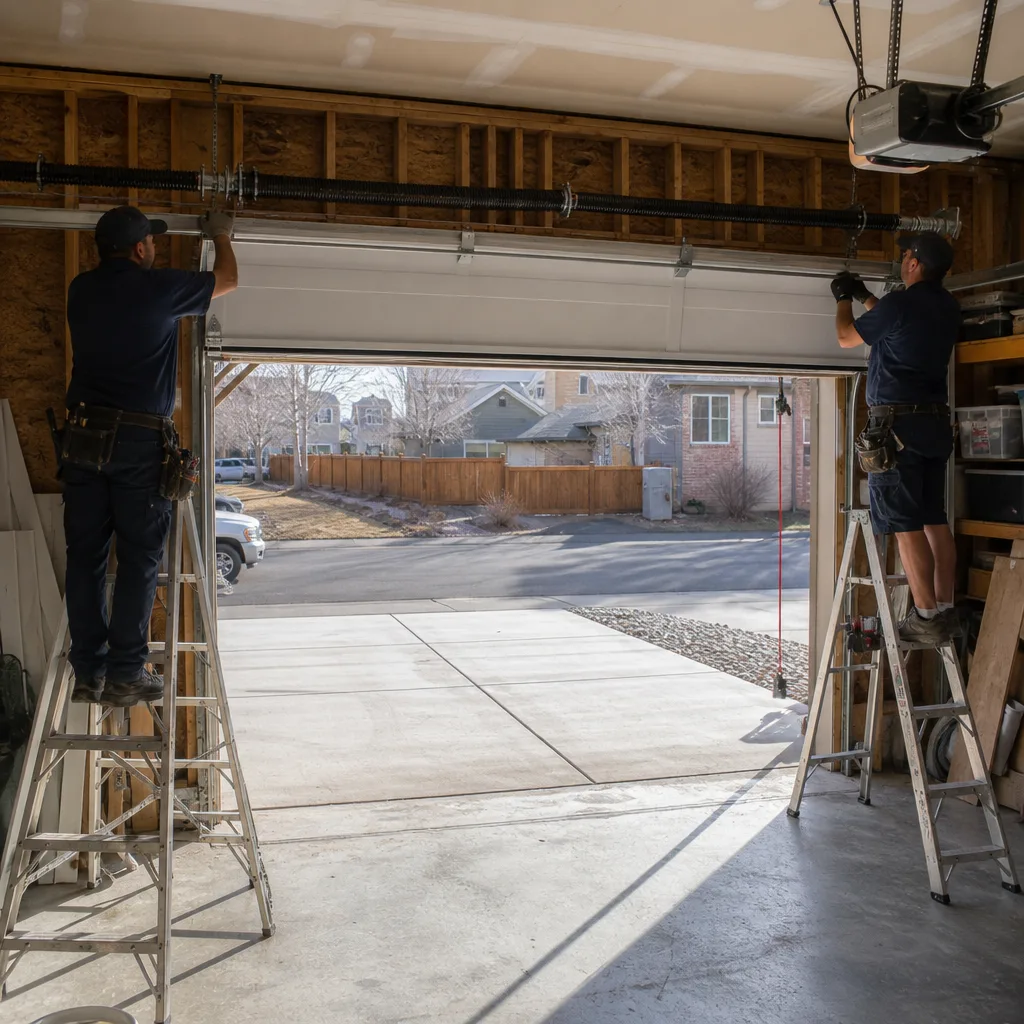
A garage door professional is the right call when the diagnostic path involves a component under tension, a problem you can’t isolate after the tests above, or any of the three stop-using signs. Broken springs, frayed cables, and bent sections are not weekend projects, and neither is anything that requires removing hardware under spring load. If the door is off its track, or if you’ve done the balance test and the door is heavy or drifting, the answer is the same: get someone who knows the system and will document what they find. Servo Garage Doors Littleton offers free estimates in Littleton, and a written price is delivered before any work starts, which is Clause 1 of The Haven Standard, not a courtesy. Call (720) 636-7083.
Frequently Asked Questions
Expect to pay between $225 and $395 for a torsion spring pair replacement in Littleton, with the higher end covering high-cycle springs that last roughly twice as long. Extension spring systems run $180 to $290. The range reflects the door’s measured weight and the spring’s cycle rating, not any markup games. Call (720) 636-7083 for a flat, written quote on your specific door. Estimates are free, and Clause 1 of The Haven Standard means the number comes in writing before work starts.
Yes, for spring and cable failures, which are the most common urgent repairs. Servo Garage Doors answers live 24/7, and in most Littleton neighborhoods we can dispatch a named technician the same day a spring breaks. Cables and springs are stock items on our trucks because they’re the parts that fail without warning. A more unusual part, like a matched bottom section or a specific logic board, typically requires ordering and a scheduled return visit.
No. The flat, written price covers the diagnosed repair, and it’s agreed before work begins. If the technician finds a second issue that wasn’t visible during the initial diagnostic, that’s a separate written quote for your approval before anything additional is done. This is Clause 1 of The Haven Standard, and it’s the rule, not the exception.
Yes. Torsion springs in the common sizes, extension springs, cables, rollers, hinges, and hardware are stocked on our trucks, which is why spring and cable repairs usually happen in a single visit. Less common components, like a specific bottom section for a Wayne Dalton door, are ordered from the manufacturer and installed on a follow-up appointment.
Most torsion springs are rated for 10,000 cycles, which translates to about 7 to 10 years for a typical Littleton homeowner who operates the door three to four times daily. Littleton’s temperature swings fatigue the steel faster than in a coastal climate, so the low end is more common here. When we replace springs, we recommend high-cycle steel, which costs an additional $40 to $80 and typically doubles the lifespan.
We service all eight major residential brands, including LiftMaster, Chamberlain, Genie, Clopay, Amarr, Wayne Dalton, Craftsman, and Raynor. Parts for older Raynor and Craftsman units occasionally require ordering, but most springs, rollers, and cables are universal or stocked in the common sizes, so the brand rarely delays a repair in a Littleton home.
The Bottom Line
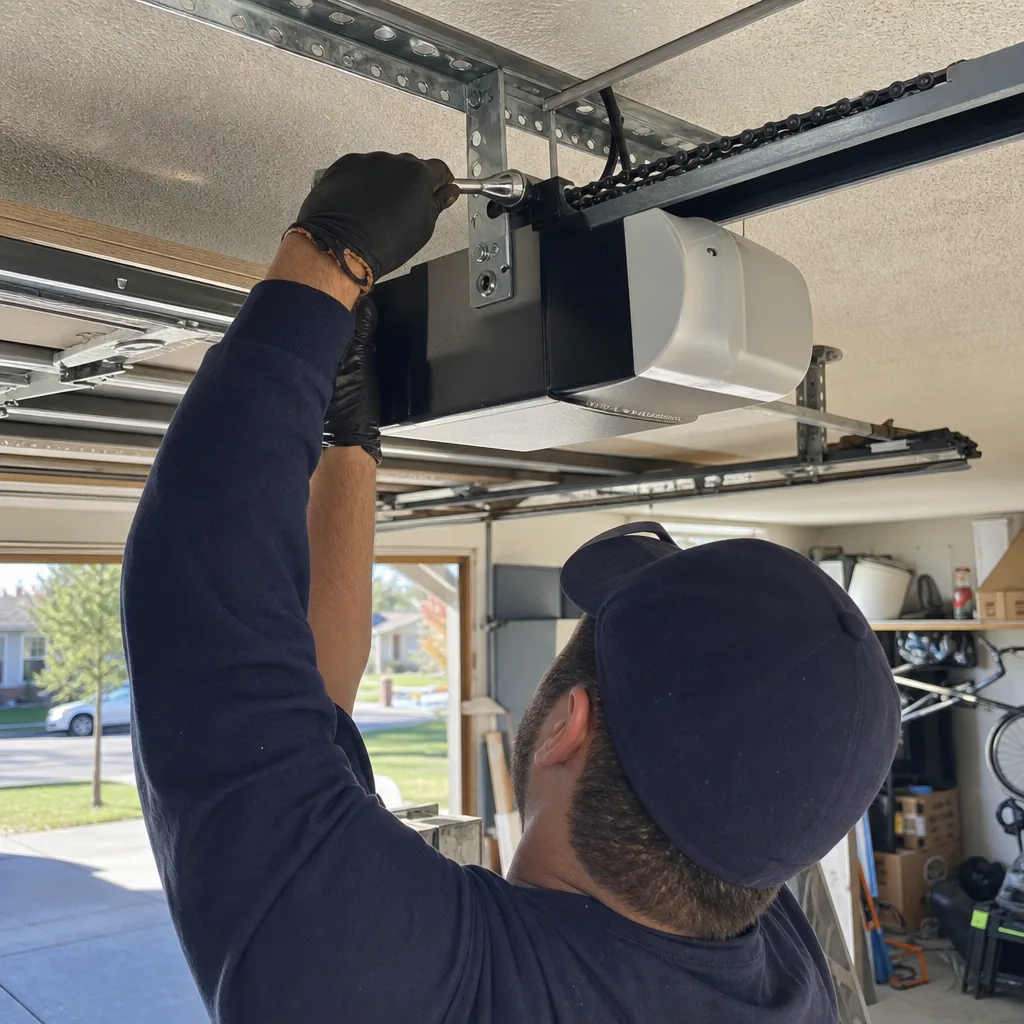
A garage door gives you weeks of warning before most failures, and the warning is specific if you know what to listen for. A popping hinge, a sagging door, a reversing opener, a squeal that returns after lubrication: each one maps to a component and a price range, and naming that component before the technician arrives is the homeowner’s best defense against an upsell. The three signs that mean the door stops being used today are a broken torsion spring, a frayed cable, and a bent bottom section, and none of them are negotiable. Every repair on this page falls into a range that should be quoted flat and in writing before any work starts. If it isn’t, that’s an answer about the company, not the door. For a free estimate and a written price on any of the repairs above, call (720) 636-7083.
Written by Marcus Deller, Owner at Servo Garage Doors Littleton, serving Littleton since 2015. Browse more guides & resources from our team.