
Last updated September 20, 2026
Full 25-point door and opener safety check with every visit - springs, cables, rollers, tracks, and your LiftMaster or Chamberlain opener included
You get a price before we start. It does not change when the truck arrives.
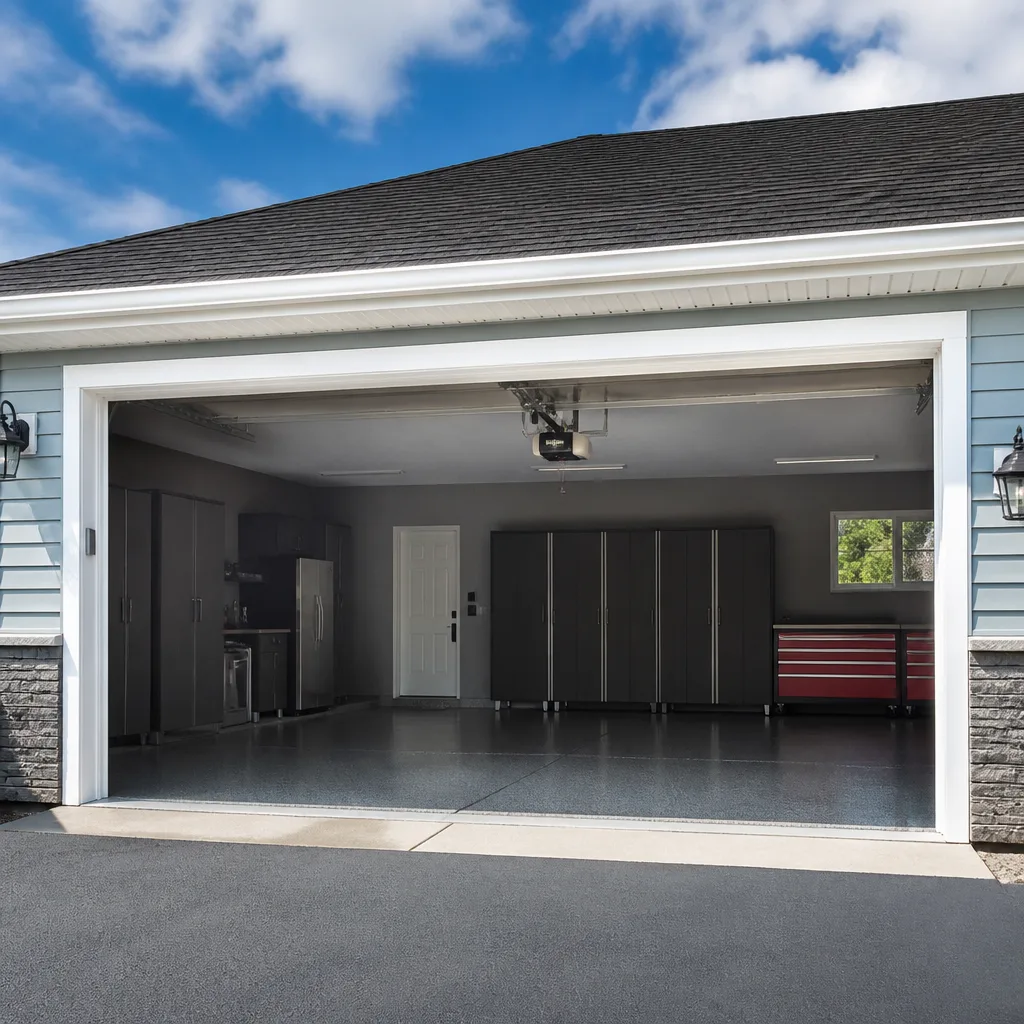
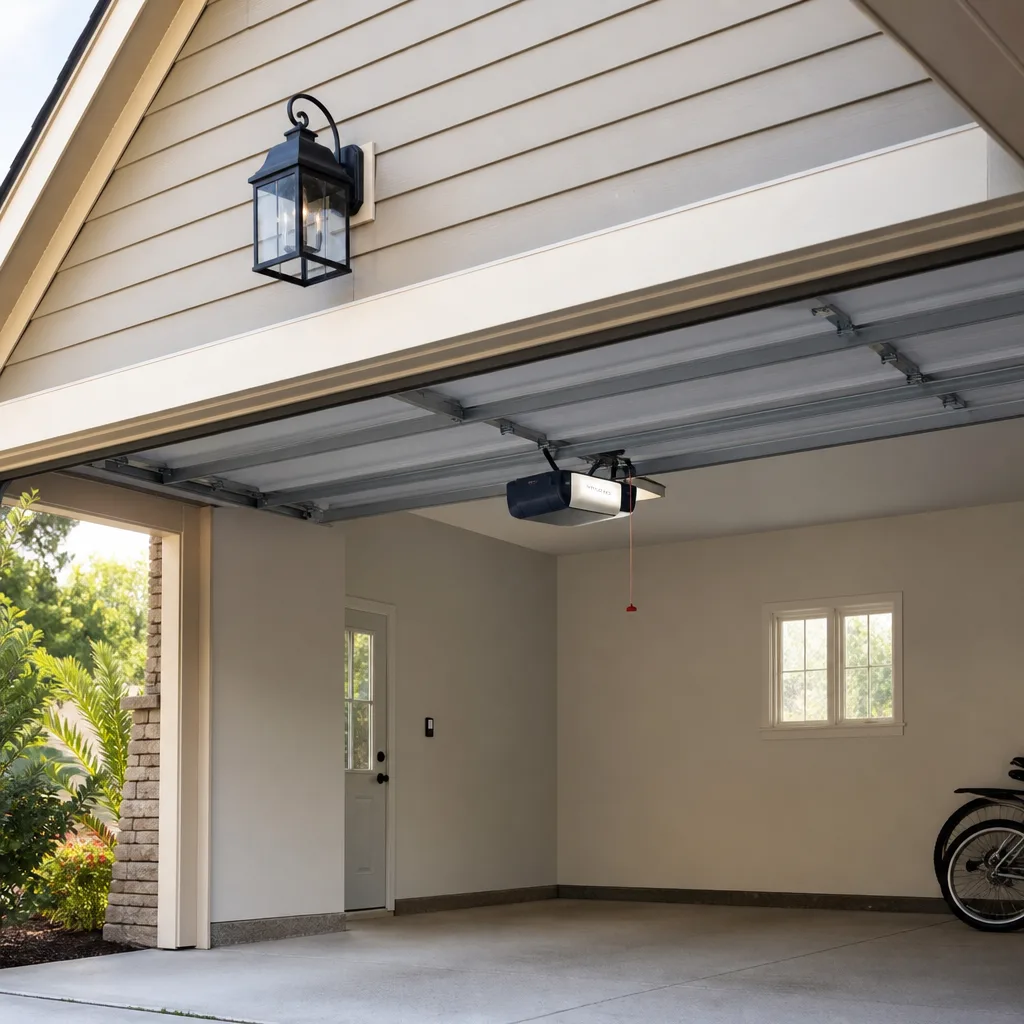
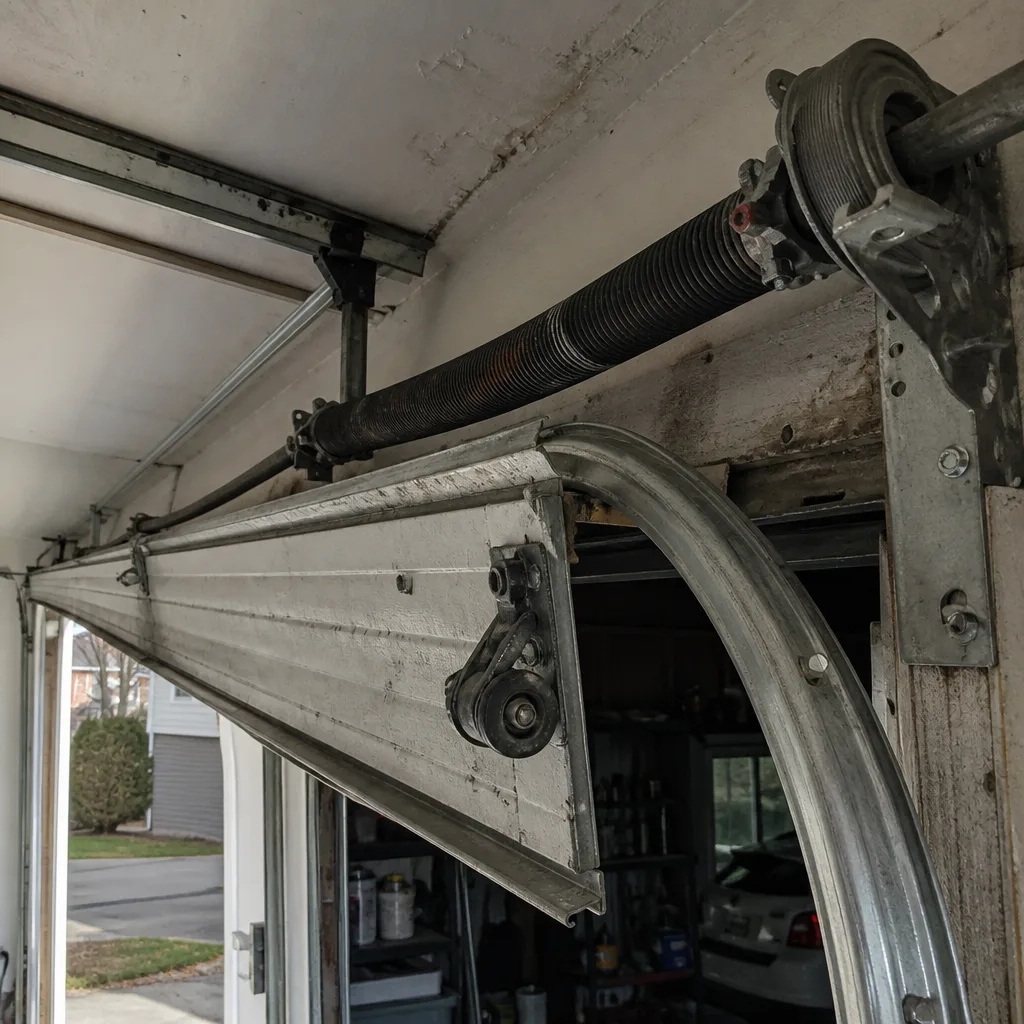 Before
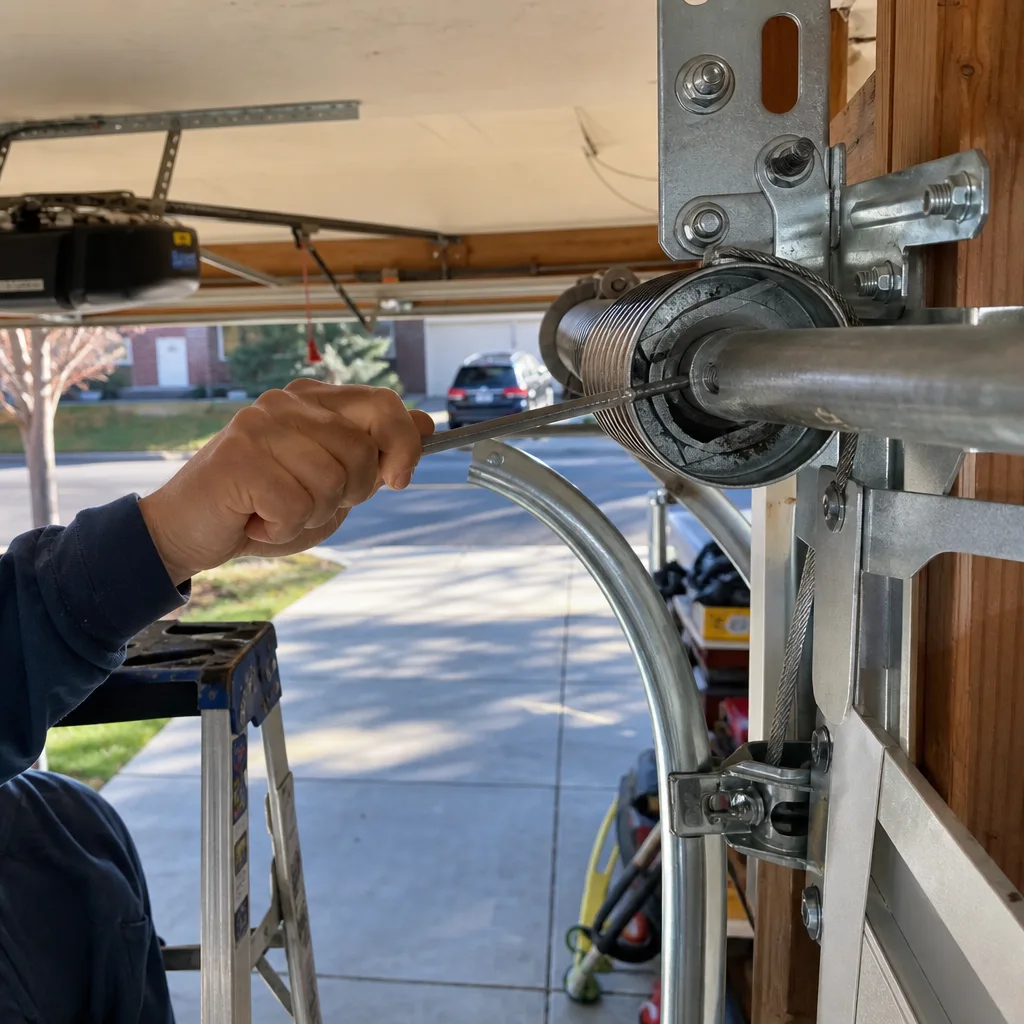 After
After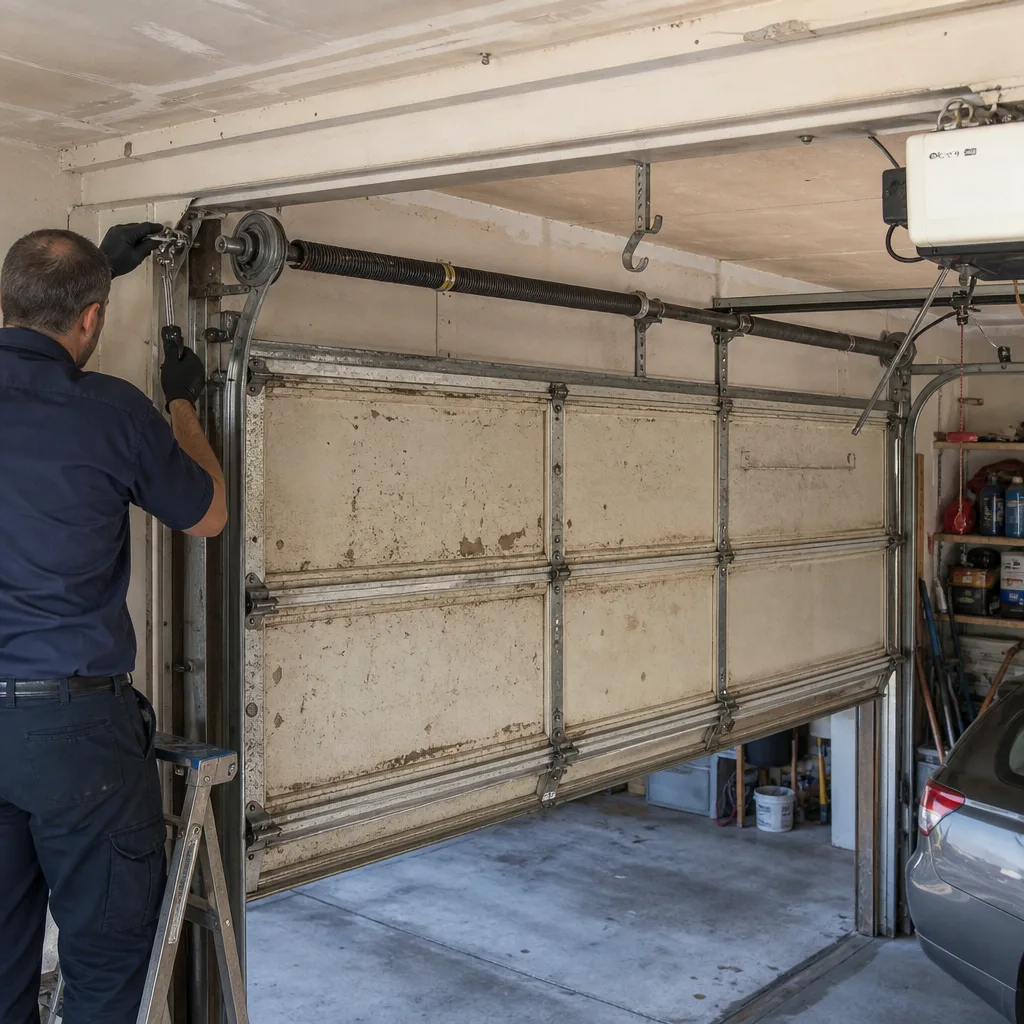 Before
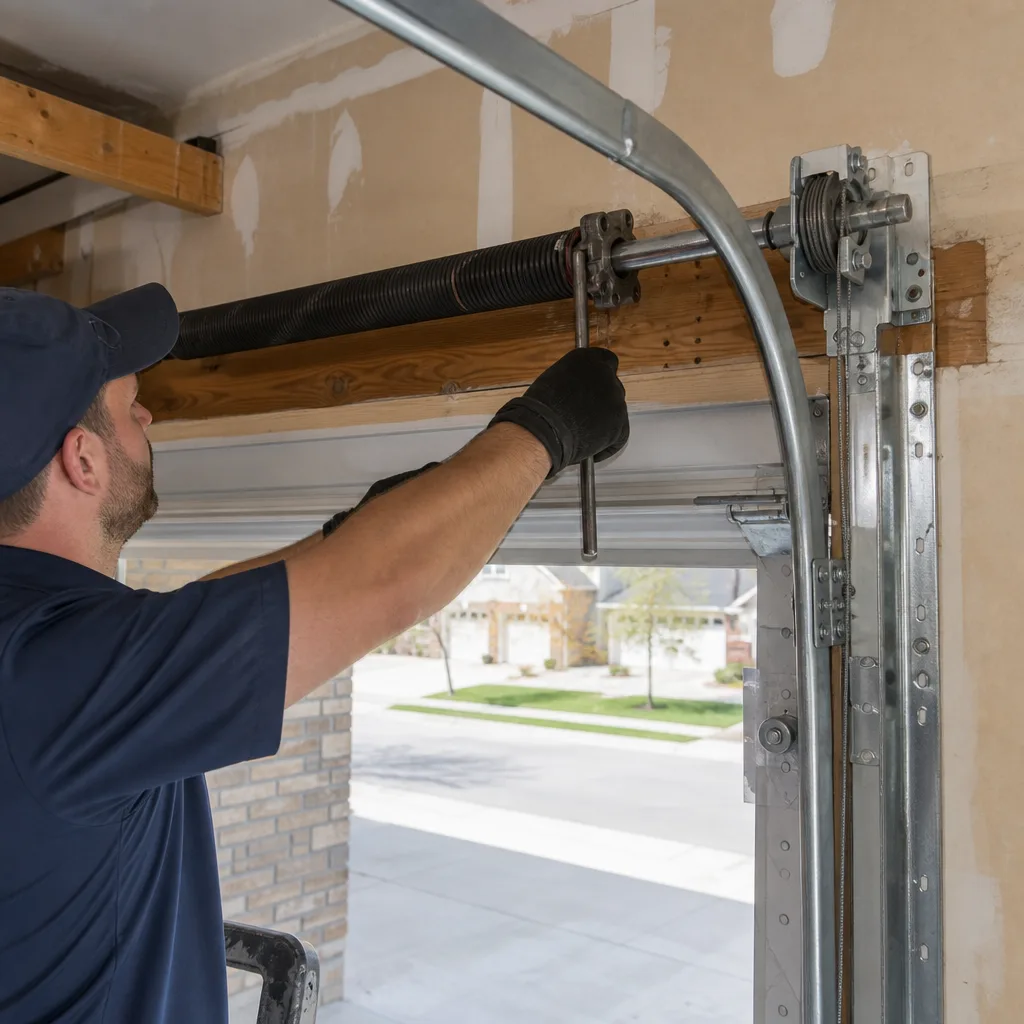 After
After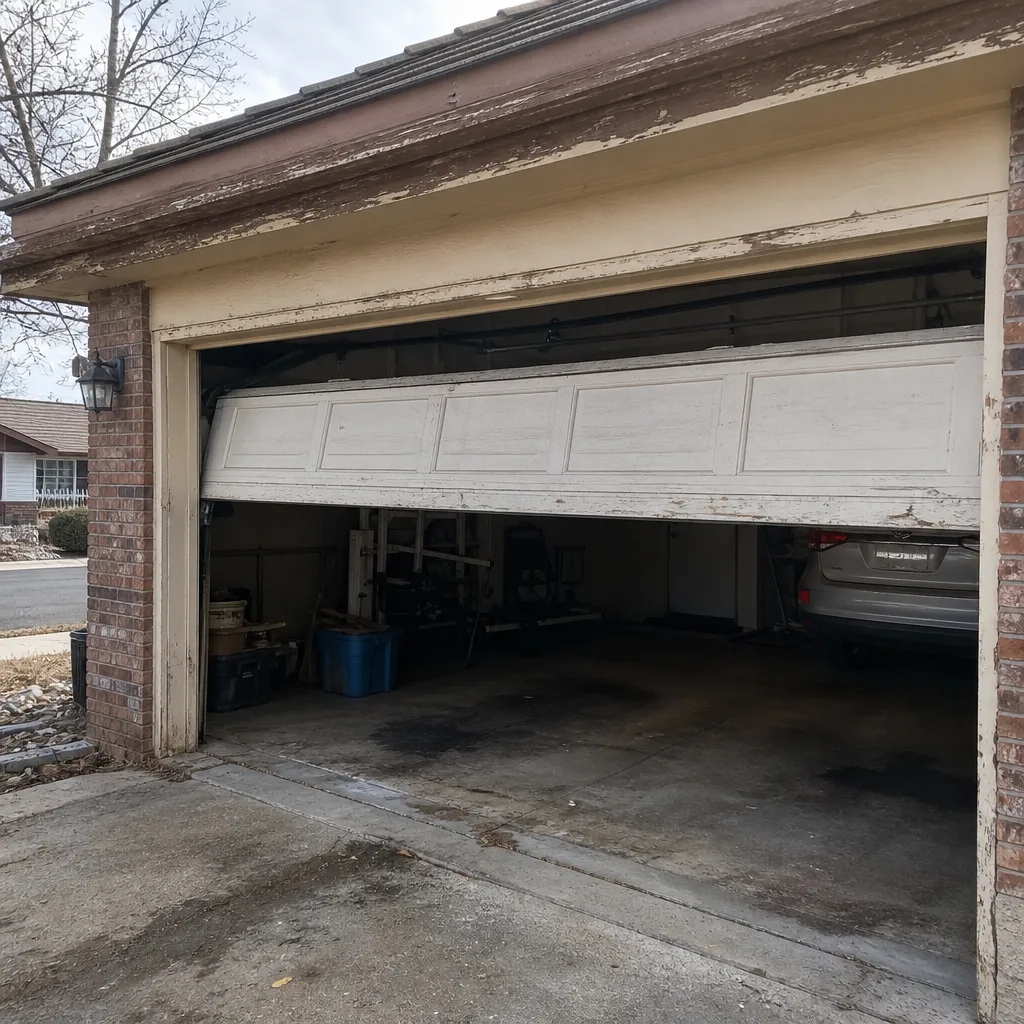 Before
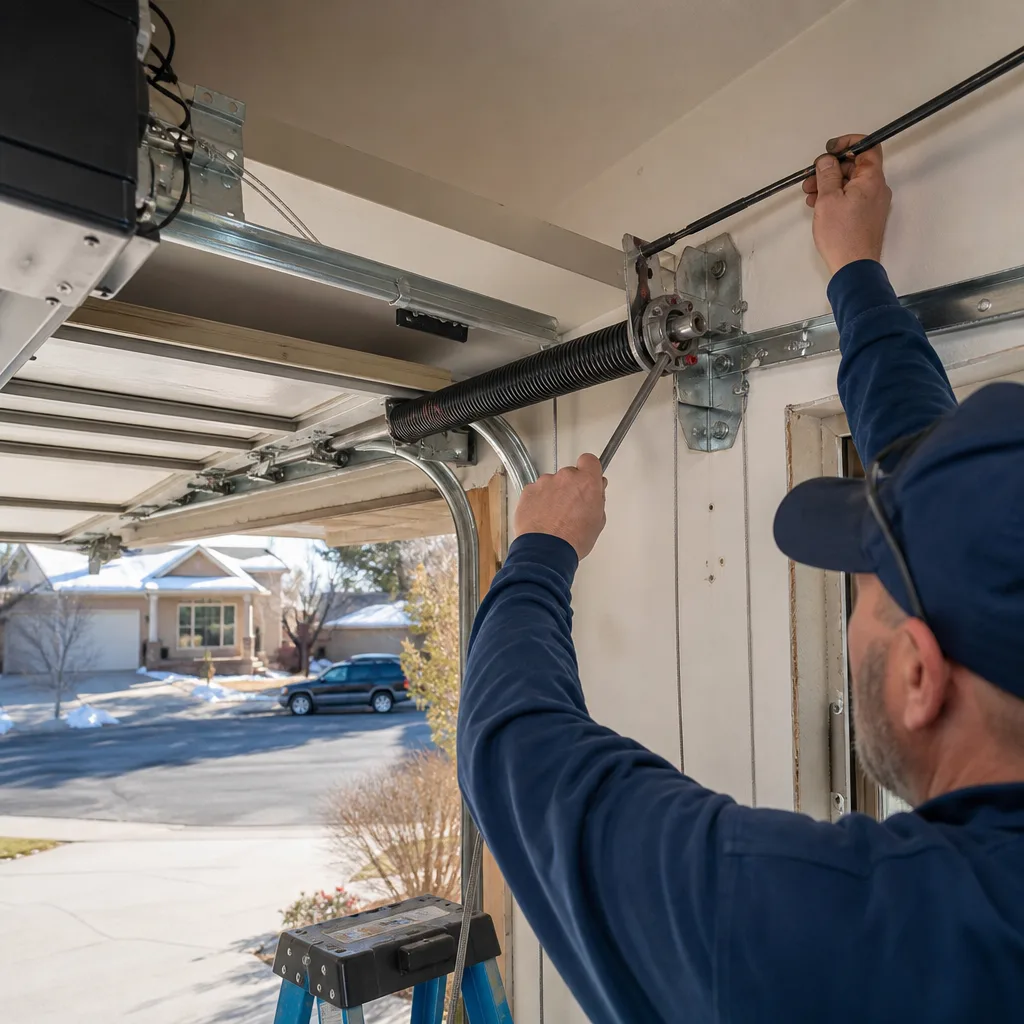 After
AfterHow to Hire a Garage Door Contractor in Littleton: A Step-by-Step Guide
Most Littleton homeowners don’t get burned by a bad garage door repair because they picked an unskilled technician. They get burned at the exact moment they say the word “go” after hearing a number spoken out loud. Colorado has no dedicated garage door contractor license. There is no state board that tests torsion spring knowledge. Any person with a pickup truck and a business card can legally work on your garage door in Littleton tomorrow morning. That means the only contractual protection you have is a piece of paper with a dollar figure and a scope of work written on it before a single tool comes out. This guide walks through the hiring process step by step, built around preventing that one specific failure point: accepting a verbal number and mistaking it for a quote. For more guides & resources on protecting your home, see our blog.
Quick Answer
Hire a garage door contractor in Littleton by requesting a written, itemized quote before any work begins, verifying the company’s general liability insurance with a current Certificate of Insurance, and asking the five diagnostic questions below before booking. A competent contractor will quote a flat dollar range on the page, explain what failed using correct terminology, and document the failed component with photographs before pricing a replacement. If a company refuses to put a price in writing before starting, that is not a scheduling conflict. It is a business model.
Table of Contents
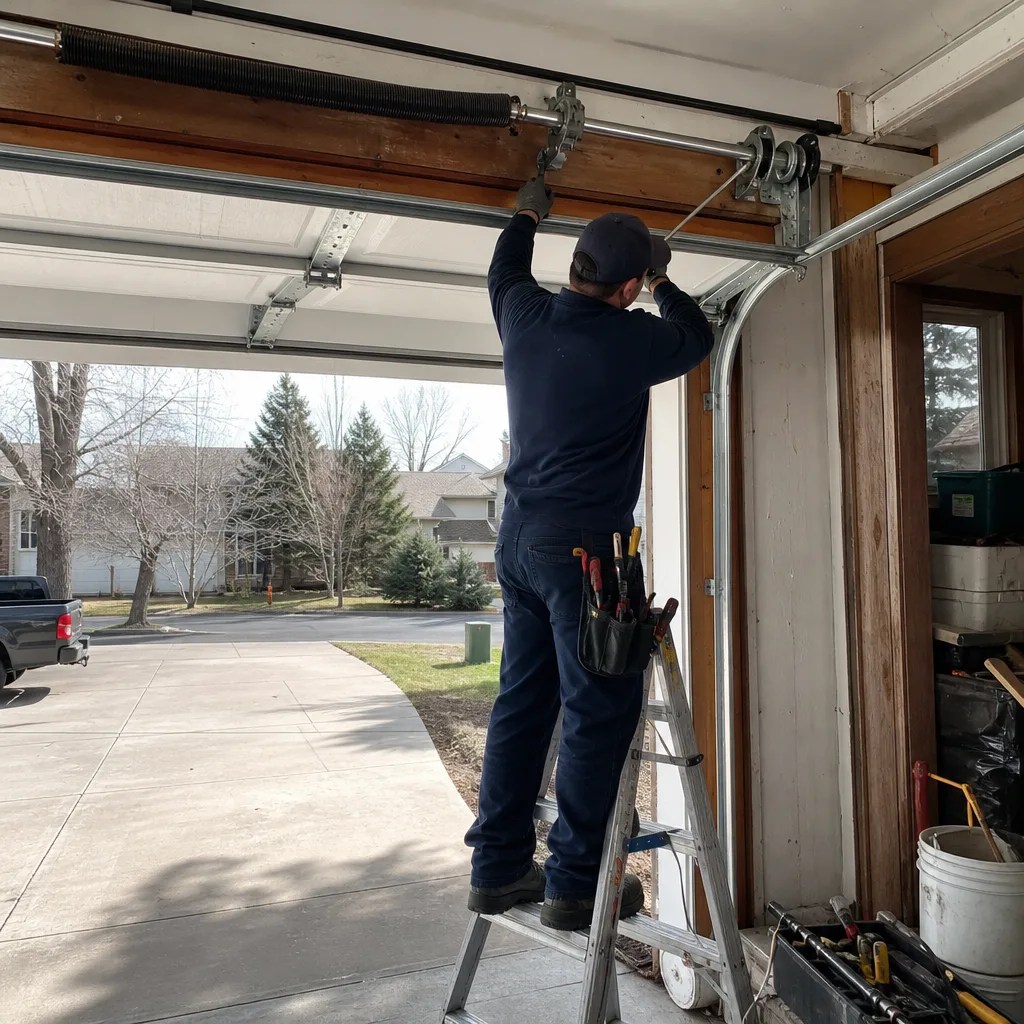
- Why Verbal Quotes Fail in Colorado
- The Exact Documentation to Request: Licensing and Insurance in Colorado
- How to Read a Quote Document: The Five Line Items That Make It Binding
- The Photograph-Before-Quote Standard
- Red-Flag Language on the Phone: What “Assessment Fee Applied to Repair” Really Means
- Five Questions to Ask Before Booking, and the Answers That Signal Trouble
- Common Mistakes to Avoid
- When to Call a Professional
- Frequently Asked Questions
 Before
 After
AfterWhy Verbal Quotes Fail in Colorado
Colorado is one of the states with no dedicated garage door contractor license. There is no state-mandated exam, no required apprenticeship, no regulatory body that can pull a garage door contractor’s “license” for bad work. The state does have general contractor registration requirements through DORA for certain project types, but a standalone garage door repair or spring replacement does not fall under a specific trade licensure the way plumbing and electrical work does. What this means for a homeowner in Littleton is simple: the gatekeeping that exists in other trades does not exist here. The only filter between you and an unqualified technician is what you demand in writing before the work starts.
Verbal quotes fail for a structural reason, not a moral one. A spoken number has no scope statement attached. It does not specify whether the replacement spring is a 0.2075-inch wire diameter or a 0.250-inch diameter. It does not state whether the opener replacement includes a new rail, a new logic board, or just a motor swap. It does not list what happens if the technician discovers a second problem when the panel is open. A verbal quote is a conversation. A written quote is a contract offer.
We have seen this failure play out in neighborhoods across Littleton, from Ken Caryl to Sterling Ranch. A homeowner calls a company, describes a broken spring over the phone, gets quoted “around $250, probably,” and then watches the technician arrive and reprice the job at $600 because the spring “turned out to be a different size” or the job “requires a torsion conversion.” The homeowner, with a garage door hanging half-open and a car stuck inside, says yes because the alternative feels worse. That is not a negotiation. That is leverage.
The fix is not to become a garage door expert before you call. It is to require a written quote before work begins and to understand what that document must contain to mean anything. That is what the next two sections cover.
The Exact Documentation to Request: Licensing and Insurance in Colorado
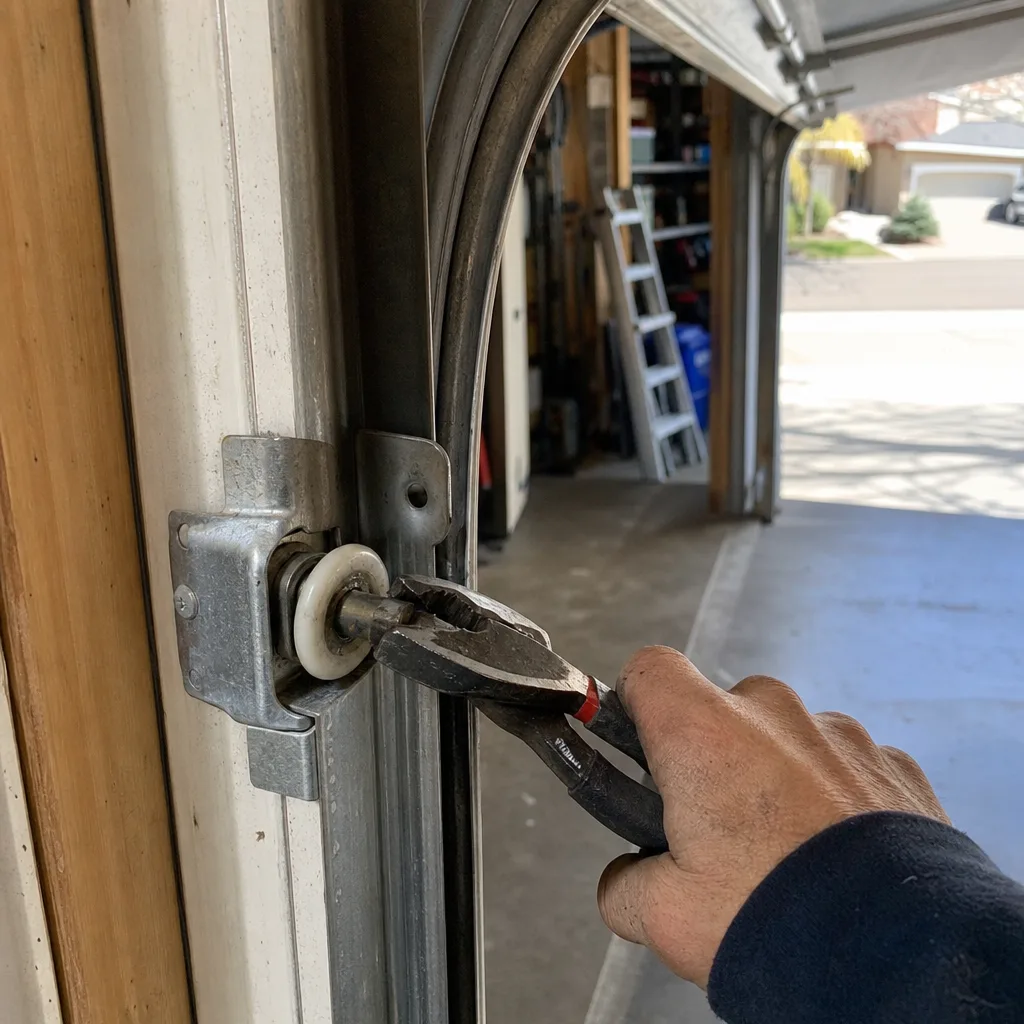
Two documents matter when you hire a garage door contractor in Littleton. Neither one is a state garage door license, because Colorado does not issue one. The first is proof of insurance. The second is the written quote itself. We will cover the quote in the next section because it is the more complex document. First, insurance.
What a Valid Certificate of Insurance Looks Like
A Certificate of Insurance, or COI, is a one-page document issued by the contractor’s insurance provider. It is not a PDF the contractor typed up themselves. It comes from the insurance company and includes the insurance company’s name, the policy number, the policy effective and expiration dates, the coverage limits, and most importantly, the name of the insured entity. If you requested the COI from another company and the name on the certificate does not match the name on the quote, that is a problem.
For garage door work, the COI should show general liability coverage. The specific line to look for is under “General Liability” or “Commercial General Liability,” and the coverage limit should be at least $1,000,000 per occurrence and $2,000,000 aggregate. General liability covers property damage and bodily injury caused by the contractor’s work. If a technician drops a torsion bar through your car windshield or a mis-leveled track sends a 160-pound door off its rails, general liability is what covers the damage.
Some contractors will offer a “certificate” that is really just a screenshot of an old policy declarations page. Check the effective date. A COI with an expiration date that has already passed is not proof of anything. Also check that the policy is active for the date of your service. Most insurance companies will issue a COI directly to a potential client if the contractor requests it. A contractor who hesitates to provide a COI is telling you something about what happens if the work goes wrong on your property.
What Insurance Does Not Cover
General liability does not cover the garage door itself. It does not pay for a spring that fails a second time because the technician installed the wrong wire diameter. That is what a workmanship warranty is for, which should be written into the quote document, not promised verbally. In Littleton’s climate, where temperature swings between single digits and the 90s stress spring steel through thousands of cycles a year, a workmanship warranty that lasts at least one full season cycle is a reasonable floor to ask about. See our Seasonal Garage Door Care for Littleton: Year-Round Homeowner’s Guide for how local weather affects your system.
The company should also carry workers’ compensation insurance if they send employees rather than an owner-operator. If a technician is injured on your property and the company does not carry workers’ comp, the liability can fall on your homeowner’s insurance. Ask to see the workers’ comp certificate if the company has employees. An owner-operator who works alone may legitimately not carry workers’ comp for themselves, but the moment there are W-2 employees on the job, it should exist.
Servo Garage Doors Littleton is independently owned and operated under The Haven Standard, holding its own license and insurance. The documentation is not buried in fine print. Upon request, we provide a current Certificate of Insurance before the technician arrives.
How to Read a Quote Document: The Five Line Items That Make It Binding
A quote is only as good as what it says. A one-line email that reads “Spring replacement – $299” is not a quote. It is a number in a vacuum. The purpose of a written quote is to define the work precisely enough that if a dispute arises later, the document settles it. Here are the five line items that must appear for the quote to be binding.
- The specific part name and specification. “Replace torsion spring” is a task. “Replace right-side torsion spring, 0.225-inch wire diameter, 24-inch length, 2-inch inside diameter” is a specification. The second one is what makes the quote enforceable. If the technician arrives and claims the job “needs a heavier spring,” you can point to the document and ask what changed from the diagnostic.
- The flat price in dollars. Not a range. Not an estimate subject to change. A flat, written dollar figure that applies to the stated scope. If the quote says “$250-$500 depending on the door,” it is not a quote. It is a fishing expedition.
- The labor and materials split, or an all-inclusive statement. It is fine for a quote to say “all-inclusive” if that is true. But if the price is separated into parts and labor, you should be able to see both numbers. This protects against the “the part was more expensive than we thought” conversation, which is the second-most common reprice technique after scope creep.
- A statement on disposal and cleanup. Old springs, old openers, old sections of track: who takes them away? Is disposal included in the price? A quote that does not mention disposal leaves a $50-$100 gap that gets discovered at the end of the job. The quote should state either “disposal included” or list it as a line item.
- Warranty terms in writing. What is covered, for how long, and what voids it. A sentence like “1-year parts and labor warranty on this repair” is specific and binding. The phrase “we stand behind our work” is neither.
Clause 1 of The Haven Standard is why Servo Garage Doors Littleton always delivers a flat, written price and a written scope before any work starts. The quote document lists the part, the specification, the price, and the warranty in plain language. ‘Call for a quote’ contradicts Clause 1, so it is not how we operate. If a homeowner calls us about Garage Door Repair in Littleton, they get a written document with a dollar figure before anyone touches a tool.
Language That Lets a Contractor Reprice On-Site
Watch for these phrases in a written quote. Each one creates an opening to change the price after the work begins:
- “Subject to final inspection” - means the quote is not final.
- “Additional parts may be required” - without a stated cap on what “additional” can cost, this is a blank check.
- “Price valid for discovery of pre-existing issues” - ambiguous enough to mean anything on the day of service.
- “Labor only” - the parts are extra, and the parts are where the margin hides.
- “Assessment fee applied to repair” - covered in detail below, but in a quote context it means the price on the page is not the price you pay.
A binding quote is boring. It has a number, a scope, and no adjectives.
The Photograph-Before-Quote Standard
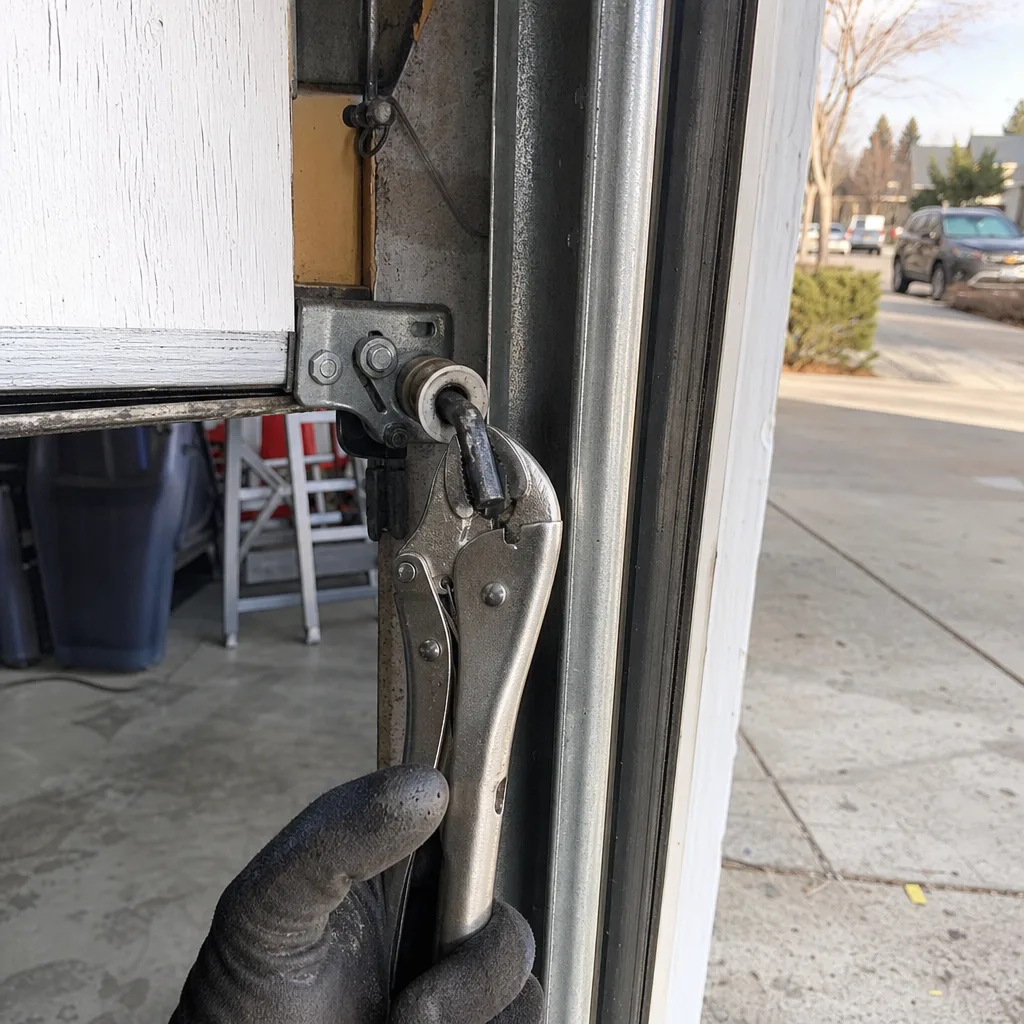
Here is a diagnostic standard that separates contractors who work from evidence from contractors who work from a sales script: the technician photographs the failed component before quoting a replacement. This should be the baseline in Littleton, not a differentiator. Here is why it matters.
A garage door that will not open can fail for one of fourteen common reasons. Broken torsion spring, broken extension spring, snapped cable, stripped gear in the opener, failed logic board, misaligned photo eye, bent track, worn rollers, broken hinge, and five more. Each has a different price. If a technician quotes you a replacement without showing you the failed part, you have no way to verify that the part actually failed. You are buying on trust, and in a state with no garage door contractor license, trust is not a regulatory standard. It is a marketing phrase.
At Servo Garage Doors Littleton, the photo-first rule is not a policy we added after a customer complaint. It is the founding rule Servo was built on in 2015. Clause 4 of The Haven Standard is why the technician photographs the failed part before quoting a replacement. If the torsion spring shows a clean break at the coil, the photo shows a clean break at the coil. The customer sees the evidence before they approve the price. If the diagnosis is a failed logic board on a LiftMaster opener, the customer sees the logic board with the technician’s meter reading before the replacement quote exists.
This standard does two things. It removes the information asymmetry that makes verbal re-pricing possible, because the homeowner and the technician are looking at the same evidence. And it creates a documented record. If the repair fails three months later and the homeowner wants to know what was done, the photo record answers the question. The documented photo record on every visit is included, not optional. The customer receives evidence of what was found and what was done, tracing back to that founding rule. A contractor who will not show you the failed part before quoting a replacement is asking you to buy something you have not seen. In no other industry is that normal.
Red-Flag Language on the Phone: What “Assessment Fee Applied to Repair” Really Means
Service calls in the garage door industry use a specific vocabulary. Some of it is legitimate trade language. Some of it is designed to close a sale before you realize a sale is happening. Here is the red-flag language to listen for during the first phone call, and what each phrase means financially.
“Assessment fee applied to repair”
This phrase sounds like good news. The fee is not an extra charge; it is “applied” to the repair, so you are not losing money. The financial reality is different. The assessment fee is often $49 to $89, and it is collected when the technician arrives, before any diagnostic work is done. Once you have paid it, you are now a customer with sunk cost. If the repair quote comes in higher than you expected, you are more likely to accept it because walking away means losing the assessment fee. The fee was never a neutral diagnostic cost. It was a commitment device.
The competent contractor’s alternative: free diagnosis with a written quote, or a clearly stated diagnostic charge that the customer knows about and agrees to before the visit, with no bait-and-switch framing. Servo Garage Doors Littleton does not charge an assessment fee. The diagnosis, the quote, and the written scope are delivered before any money changes hands. The price is quoted and agreed before any work starts, always, on every job.
Other Phrases That Signal Repricing Is Coming
- “I can’t give you an exact price over the phone, but…” - Yes, some things require seeing the door. But if the company describes the diagnostic process as open-ended and the price as “depending on what we find,” that is not diagnostic honesty. That is a pricing strategy.
- “We’ll waive the service call fee if you go with the repair.” - The fee is the leverage. Waiving it is the same tactic as “assessment fee applied to repair” with different grammar.
- “The part is on backorder, but we have a comparable one for a little more.” - If the quote specified a Clopay or Amarr part number, a “comparable” part is a different part. The price difference is not “a little.”
- “Most doors your age need a full replacement anyway.” - Most doors in Littleton get replaced when they are 15 to 25 years old, depending on the model and exposure. But “most” is not a diagnosis. It is an upsell attempt. The correct answer references your specific door, not the average door.
The underlying pattern in all red-flag language is the same: the company uses the diagnostic visit to create commitment before the price exists. The counter-strategy is to require the written quote first and to treat any company that resists as if it has already told you how it operates.
Five Questions to Ask Before Booking, and the Answers That Signal Trouble
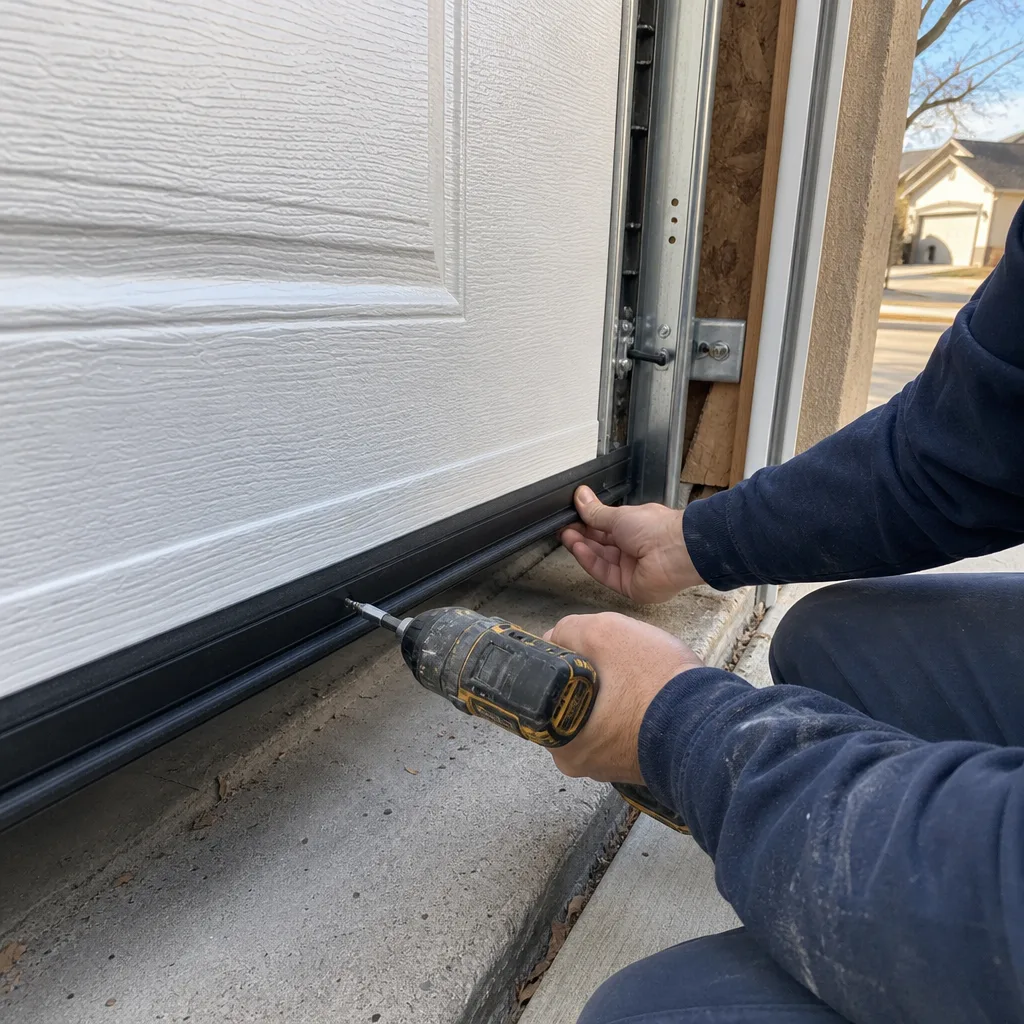
These five questions cut through the sales scripts. Ask all five before you book any garage door work in Littleton. A competent contractor answers them directly and without defensiveness. A contractor who hedges on any one of them is telling you how the job will go.
- “Will you put the price in writing before any work starts?”
The answer from a competent contractor is one word: “Yes.” No qualifications, no “well, it depends on what we find,” no “we’ll give you a range.” The answer that signals trouble is any version of “we’ll let you know once we’re there” or “the technician will explain the options.” The technician is a salesperson at that point, not a diagnostician. - “What exactly will the written quote include?”
The competent answer names the components: the specific part with specification, the flat price, the labor, the disposal, the warranty. If the answer is “the price and everything,” that is not an answer. The quote document structure is the contract. A contractor who cannot describe their own quote format has not thought about it. - “Can I see the failed part before you replace it?”
The competent answer is “Yes, and we photograph it.” The red-flag answer is “we don’t do that” or “our technicians just know what’s wrong.” A technician who cannot show you the failed part is asking for faith, not payment. - “Are you licensed and insured, and can I see the certificate?”
The competent answer is “Yes, we’ll send the COI” or “we carry it on the truck and you can see it before we start.” No garage door contractor license exists in Colorado, but general liability insurance absolutely should. If the company hesitates to provide proof of insurance, that means the answer is no, they are not insured, and the hesitation is the answer. - “What is your warranty, and is it in writing?”
The competent answer states the coverage period, what it covers, and confirms it will be on the quote document. The red-flag answer is “we stand behind our work” without a number or a written policy. A verbal warranty is a suggestion. A written warranty is a commitment.
Ask these questions in order. By the time you finish the fifth one, you will know whether you are hiring a contractor or a sales operation. If you want to skip the interview process entirely, our Free Second Opinion offer applies to any written estimate from another company. Bring the paperwork and we will evaluate it against the same written-price standard we apply to our own work.
Common Mistakes to Avoid
- Accepting a verbal price and calling it a quote. A spoken number is not a contract. If it is not written down with a scope, it does not exist. This is the single most common failure point in Littleton garage door hiring, and it is the one this entire guide exists to prevent.
- Skipping the insurance verification. “Trust me, I’m insured” is not a Certificate of Insurance. If a technician damages your property and the company is not insured, your homeowner’s policy becomes the payer, and your premium reflects it the next year.
- Treating an emergency as a reason to skip the written quote. A broken spring at 9 p.m. with your car stuck inside feels like a moment when speed matters more than paperwork. It is exactly the moment when a written quote matters most. Emergency pressure is a re-pricing window. The written quote closes it.
- Buying on price alone. The cheapest quote in Littleton is often the most expensive by the time the job is done, because the low number was not for the same scope of work. A $99 spring replacement becomes $340 when the “one spring” becomes “both springs plus a safety inspection.” Compare scopes, not numbers.
- Not asking about the warranty in writing. A garage door in Littleton cycles through extreme temperature shifts. Springs and openers fail in predictable ways over time. A written warranty is the only version of “we’ll fix it if it breaks again” that means anything.
- Assuming a brand name means a qualified installer. A Wayne Dalton or Craftsman part is only as good as the person who installs it. Brand loyalty to the manufacturer does not transfer to the technician. The installer’s documentation standard matters more than the brand on the box.
- Letting urgency override the diagnostic step. “Need it fixed today” is a scheduling request, not a reason to skip the photo, the quote, and the written scope. If a contractor skips the diagnostic to save time, the time saved comes out of the quality of the diagnosis.
When to Call a Professional
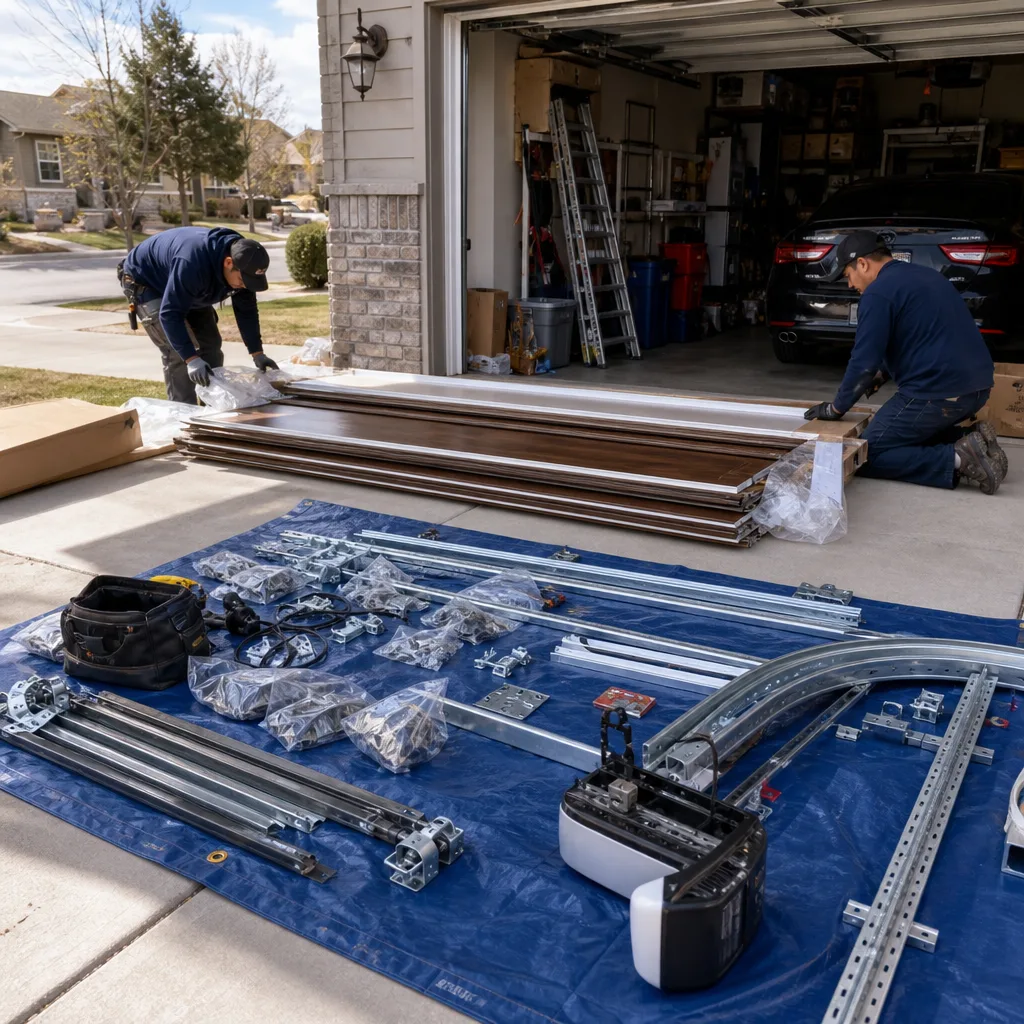
Some garage door issues are maintenance items you can evaluate yourself. A door that is loud, slightly uneven, or slow to respond can often be diagnosed by observation without touching anything. But the moment a torsion spring, cable, or track component is involved, the work becomes dangerous. Torsion springs on a residential door store enough tension to cause serious injury if mishandled. Cables under load can sever fingers. A door that has come off its tracks weighs between 150 and 300 pounds and can fall without warning. These are not DIY repairs. They are professional repairs with a specific safety protocol. In Littleton, we handle emergency calls at any hour because a door stuck open is a security problem, not just an inconvenience. If you are unsure whether your issue is safe to evaluate on your own, error on the side of keeping your hands off the hardware and calling a professional. Servo Garage Doors Littleton offers free estimates in Littleton, call (720) 636-7083.
Frequently Asked Questions
Most garage door repairs in Littleton fall between $180 and $450 for common issues like spring replacement, cable repair, or opener troubleshooting. A full Garage Door Installation in Littleton typically runs $1,200 to $3,800 depending on the door, insulation, and opener configuration. The only way to get a number that means anything is with a written quote that specifies the part and the scope. A flat, written price before any work starts is the standard we work to on every job.
Verify general liability insurance with a current Certificate of Insurance that shows at least $1,000,000 in coverage, active through your service date. Colorado does not issue a specific garage door contractor license, so the insurance document and the written quote are the two primary legitimacy signals. For a full breakdown of what to look for, see The Complete Guide to Garage Door in Littleton. Also ask for a written warranty and a documented photo record policy. Independently owned and operated under The Haven Standard, Servo Garage Doors Littleton provides a COI upon request and documents every visit with photographs.
An estimate is a range or approximation that can change. A written quote is a flat dollar figure with a defined scope of work, and it is binding if the scope does not change. In Littleton, homeowners who accept estimates rather than quotes are the ones who get re-priced on-site. We deliver a written quote before any work starts, per Clause 1 of The Haven Standard. Call (720) 636-7083 if you want a written figure, not a phone estimate.
A competent technician can often quote a common repair like a spring replacement accurately over the phone if the homeowner can provide the door model, spring type, and symptom. But the quote should still be confirmed in writing at the door, with the failed part photographed and the specification verified before work begins. If a company refuses to provide any written pricing until the technician is on-site, that is a sales strategy, not a diagnostic limitation.
A garage door opener under 10 years old with a failed logic board, stripped gear, or worn trolley carriage is often worth repairing. An opener over 15 years old with multiple worn components is usually more economical to replace, especially given Littleton’s temperature swings that stress opener motors over time. For a detailed breakdown, see our guide to Garage Door Opener Repair & Installation in Littleton. The photo-first diagnostic standard applies here too: the technician should show you the failed component before quoting either path.
The major residential brands in Littleton are LiftMaster, Chamberlain, Genie, Clopay, Amarr, Wayne Dalton, Craftsman, and Raynor. Servo Garage Doors Littleton services all eight of these brands and stocks common replacement parts for most models. The brand matters less than the documentation standard of the installer; a Wayne Dalton door installed with a written quote, photo record, and written warranty is a better outcome than a premium brand installed on a verbal number.
The Bottom Line
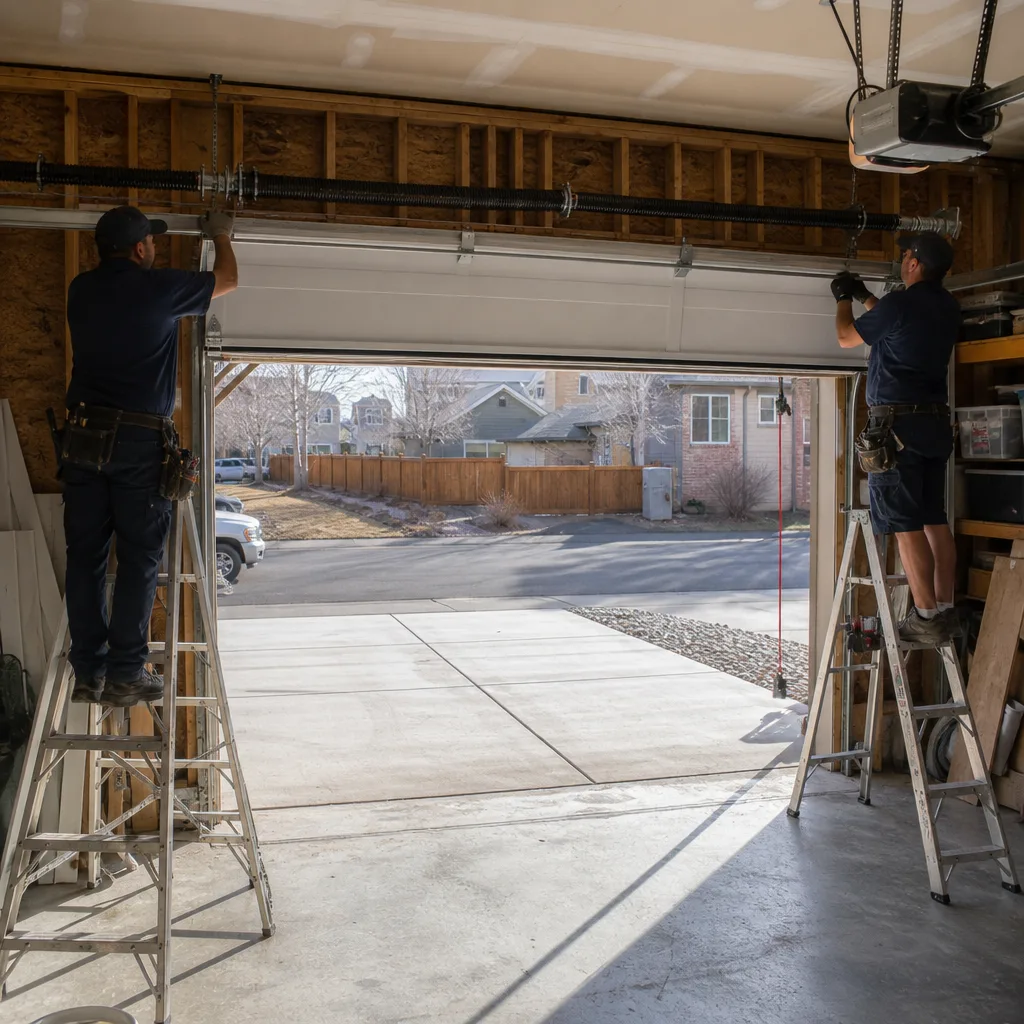
Hiring a garage door contractor in Littleton succeeds or fails on one decision: whether you accept a verbal price or demand a written quote. Colorado gives you no licensing backstop, so the paper trail is the protection. Verify the Certificate of Insurance. Read the quote for the five line items that make it binding. Require the photograph-before-quote standard. Listen for the red-flag language that signals re-pricing is coming. Ask the five questions and walk away from any contractor who hedges on the answers. If you want to see what a written-price-first process looks like in practice, start at the Servo Garage Doors Littleton home page. We have operated under The Haven Standard since 2015, with 18,000+ garage doors made right and every one of them quoted in writing before work started.
Written by Marcus Deller, Owner at Servo Garage Doors Littleton, serving Littleton since 2015.